GERMANY" "
The outgoing chancellor in pole position for the elections of September 22

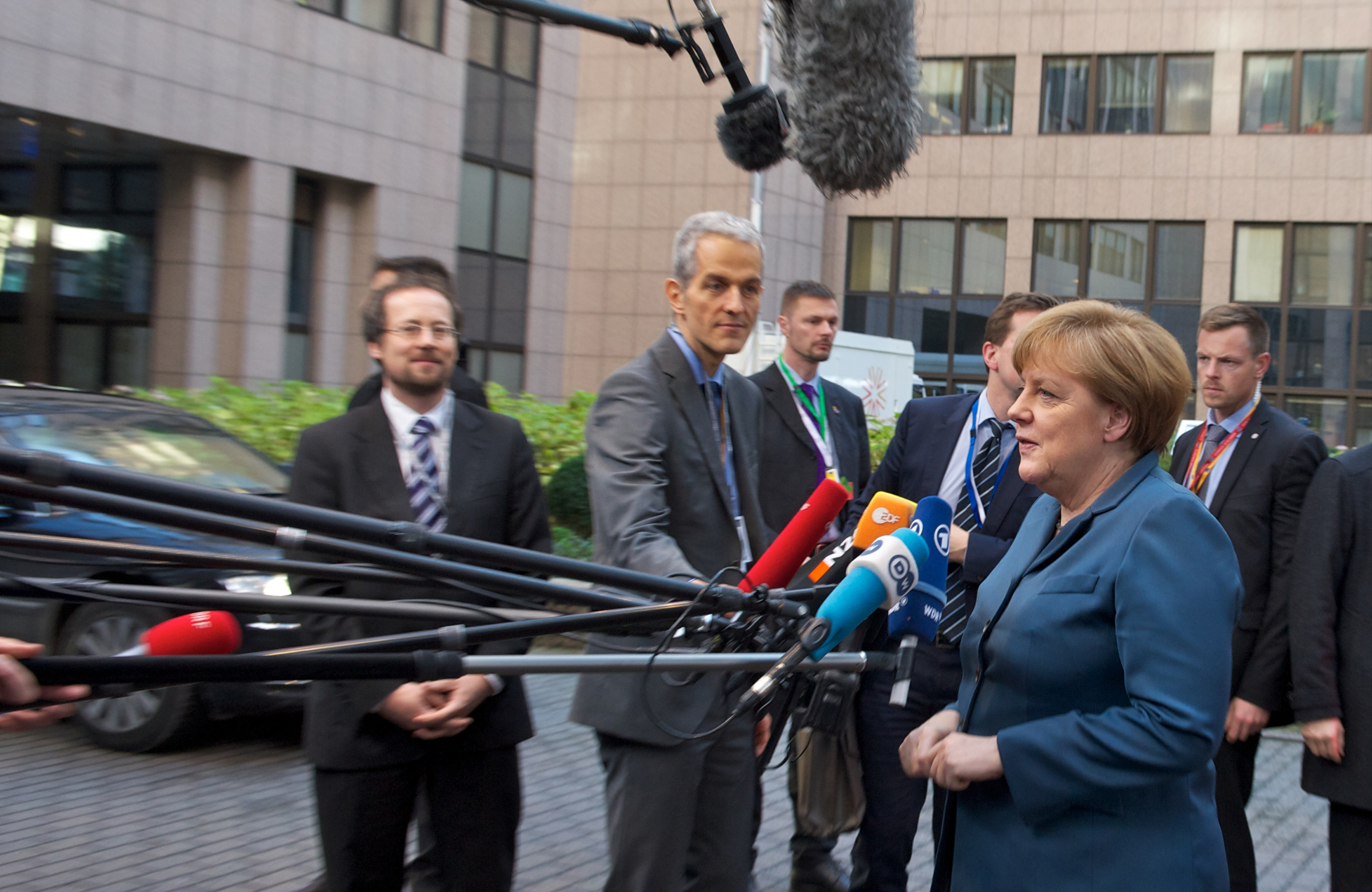
After the clear victory of September 15 – nearing absolute majority consensus – in the Bavaria elections of outgoing governor Horst Seehofer, member of the Christian Social Union (CSU), a twin party of the Christian Democrats (CDU) of Chancellor Angela Merkel, and after the heavy defeat of the Social Democratic Party (SPD) at the opposition in the Land, new scenarios are looming on the horizon for the elections of the German national parliament – Bundestag – of Sunday September 22. In fact, the Liberal Party (FPD), ally of Merkel at Federal level, will not enter the Bavarian regional parliament, and if the results of Berlin’s Bundestag were repeated, and thus the current moderate coalition CDU-CSU-FDP should not be reconfirmed, Germany’s government will have to face new options. Massimo Lavena for SIR Europe collected the opinion of Christa Langen-Peduto, “Augsburger Allgemeine Zeitung” reporter, Vatican correspondent, on the electoral prospects in Germany and Catholic participation in German political life. How could things develop with the reconfirmation of Chancellor Merkel? “The majority of German voters support Angela Merkel, and the elections in Bavaria have shown that precisely the CDU, just like Bavarian CSU party, are gaining grounds. Merkel’s problem is that her partner in Berlin, FDP Liberals, risk falling short of the 5% threshold and not making its entry in the Bundestag. Merkel is expected to gain 40%, so she may have to seek another government ally. If Liberals don’t make it, CDU would thus have no other option than to try to form a ‘great coalition’ with Socialists & Democrats”. German Catholics and the Federal government have discussed various ethical and moral questions over the past years. What could be the requests of the Catholic constituency to the future government? “From the ethical standpoint, CDU and FDP are very different. The themes at heart of the Catholic Church, such as the defence of marriage and life, non-contraception, are not ‘endorsed’ by political parties. In Germany there has always been a distinction between religion and State, between faith and politics. In Bavaria the situation is different, because the population is mostly Catholic and therefore Socialist Christians feel much closer to the Church, and even CDU unwillingly tolerates a certain degree of ethically sensitive issues”. What is the social contribution of the Church and of the faithful to national life? “The Church is largely esteemed by the State for her social commitment in kindergartens, schools, and hospitals. It is acknowledged that without the Church’s support to the State it would be difficult to maintain the current social level of the Country”. In the Country are present both the Catholic and the evangelical Churches. There appears to be the possibility of dialogue between the two confessions on several issues, also in the light of the 500th anniversary of Luther’s Reformation, in 2017. What is the situation to this regard? “I don’t see particular difficulties along the path of the Catholic Churches in view of this event, as it is a Jubilee of the evangelical Church, equally remembered by Catholics. I can’t image any problem. In fact, from the point of view of the two Churches, the 500th anniversary is considered an important event in the framework of ecumenism. The two major Christian Churches are promoting a number of joint projects. They cooperate and will continue doing so. In Germany ecumenism is very present at ‘popular’ and parish level and it’s successful precisely for this reason”. Let’s us return to political themes. Outgoing parliament and government have faced the debate on the decision regarding refugees from Middle Eastern countries, notably from Syria. What could be the evolution of Germany’s role also in the light of asylum-seekers?”Up to now liberals were less open to welcome the refugees, while Socialists&Democrats have always promoted the acceptance of refugees in Germany. If after the elections of 22 September a ‘large coalition’ with Christian Democrats and Socialists should be set up, it would bring about a positive evolution also in terms of the reception of refugees and asylum-seekers”.
