EDITORIAL
How will Europe respond to Pope Francis’ appeal for peace?

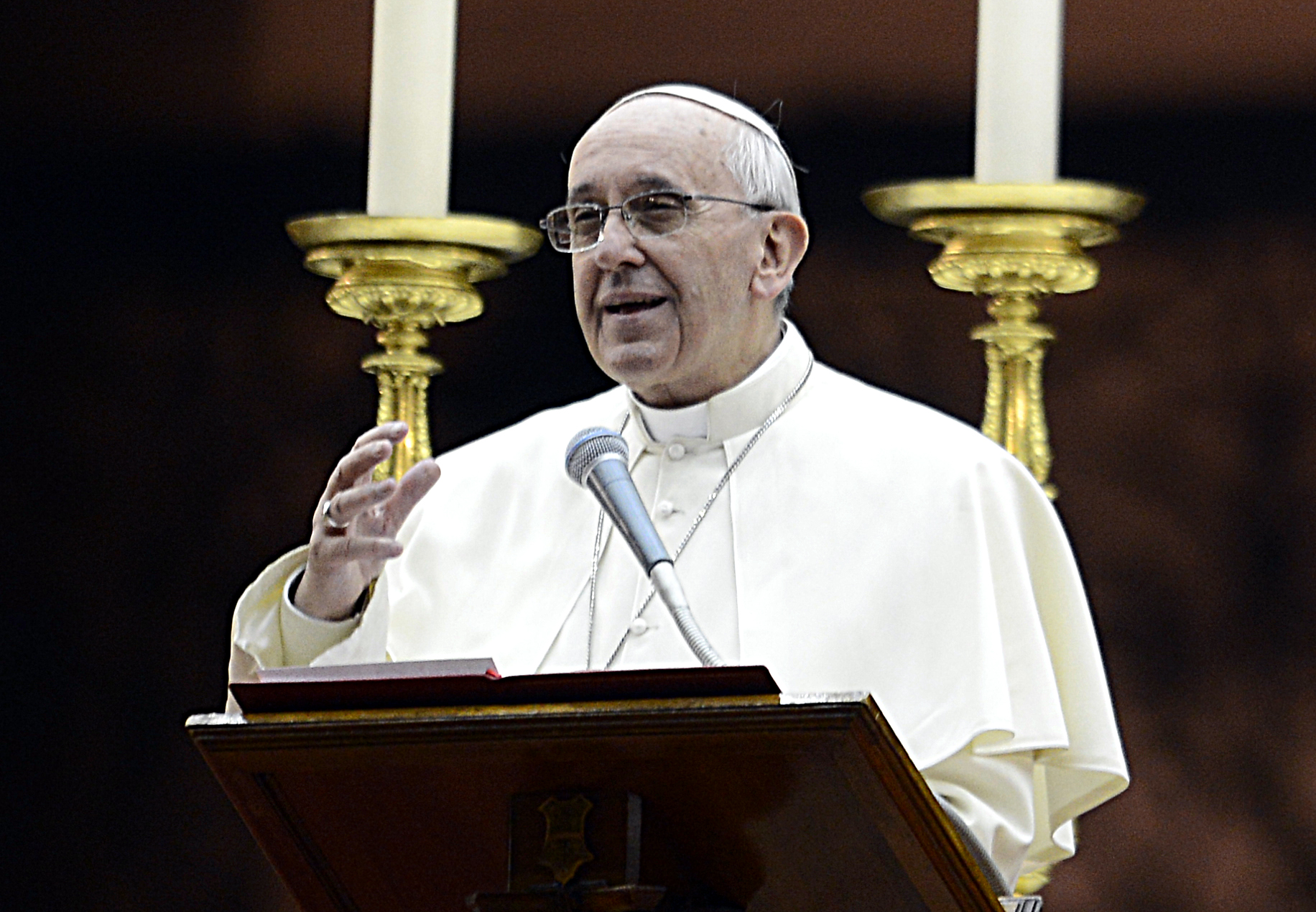
Over the past weeks, while the dark clouds of fear of a new international war scenario hovered over various parts of the world and of Europe, Pope Francis spread the winds of hope for peace. The Holy Father raised those winds with the words of the Gospel and of Paul VI. His words were unexpectedly welcomed by world public opinion, by a number of political and social institutions and by non-Catholic faithful.The Pope’s gestures, words and prayer were not and are not a strategy to give a primary role to Vatican diplomacy in the global political agenda by promoting peacekeeping initiatives and reporting injustices, which cause conflicts such as the violation of human rights and illegal sale of weapons, episodes which also some European countries are not alien to. In the Pope’s initiative there is something deeper and more important than a statement of moral leadership that failed to be addressed by the international community.His cry for peace, masterfully communicated in the reflection of the Vigil of September 7 in St. Peter’s Square and in other occasions, is the cry for peace of the Lord and of His Church.That cry comes from the heart of God and appeals to the heart of mankind.It’s a cry that the devastating disharmony caused by violence and injustice, shakes, disturbs – and, most importantly, encourages – individuals to become the builders of peace.The ongoing tragedy of a chaotic, fragmented and violent human reality, perceivable in the Syrian crisis, can be overcome only with an answer of hope, expected also in Europe.The Pope’s appeal calls upon European conscience to be stirred from its state of torpor and respond to its vocation to peace, justice and solidarity.Can this path be realistically followed? Is it possible to end a spiral of suffering and death? Can we relearn to follow the paths of peace?The Pope says: “Yes, it’s possible for everyone”, especially for Europe, that has experienced the horrors of war, and that was capable of mending the wounds, following the paths of reconciliation.To respond without hesitation to the challenge of building a better world is thus a task that Europeans are called to be the first ones to assume, as stated by John Paul II in the apostolic exhortation “Ecclesia in Europa”: “Let us work for the building of a city worthy of man. Even though it’s not possible to create a perfect social order in history, we know that each sincere effort to build a better world is accompanied by God’s blessing”.This effort will be the gauge of the “moral code” of European society, a sign announcing its spiritual, moral and cultural rebirth.European countries and European institutions alike, must however decide whether to be an arid land where the seed of hope is lifeless or whether to be a fertile land where the seed of peace and hope gives birth to a tree with abounding and tasty fruits.Europe has a great opportunity for rebirth. At a difficult moment in time Pope Francis has shown the way, that of the Beatitudes, for European recovery as a master in humanity inside and outside its own territory.The places of suffering and of war are awaiting a sign of hope from Europe. Those in positions of responsibility in the Old Continent, as well as every European citizen, must not transform expectation in disappointment.