DENMARK" "
Government measures to prevent increasing suicide rates of the elderly

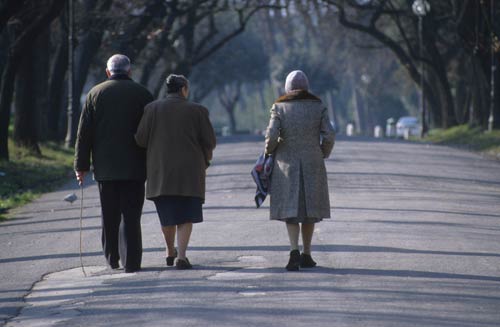
The Danish government has recently adopted a set of measures to prevent suicide among elderly people, a population bracket with the highest suicide rates compared to other age groups. A third of all those who decide to commit suicide in Denmark are over 65, with a peak among over 80-year-olds (respectively 28 and 32 cases on 100 thousand inhabitants among men aged 65-79 and among those over 80: for women the rates decrease to 11 and to 10 every 100 thousand). The project disseminates information “on the ongoing efforts at local level to prevent suicide behaviours among old people”. Moreover, it aims at increasing knowledge and the skills of professionals and volunteers who for various reasons are in close contact with old people, also in terms of monitoring surging depression rates and suicide-risk. The State of Denmark enables old people in good health to receive home visits by healthcare professionals for a check-up, and most of all to see what could be done to improve their daily lives. On the issue, Sarah Numico interviewed Karen Pallesgaard Munk, Psychology professor at Aaraus University, member of the “Ageing Society” research team. Why are suicide rates of elderly people so high in Denmark? “Denmark has one of the world’s most accurate and efficient monitoring systems of societal issues, thus the problem is monitored in a transparent manner, also because we have no sort of moral or religious condemnation against those who decide to put an end to their lives. Reporting a suicide is not considered reason for reticence nor shame. It is not considered an evil deed but a cry for help. It signals the fact that society and the family have failed, that they should have given more constructive help. The person is not to be condemned”. What are the causes of such actions? “For example, it is widely known that for widowers the fist six months following the death of their wives is a period at high suicide-risk. Every kind of loss is a threat: friends, mental faculties, health… It can be said that the root causes are all forms of ‘ruptures’ along with the lack of future vision, limited to the perspective of irreversible death”. How is society responsible for this? “People aren’t aware of what happens to those near them, they don’t realize that one of their dear ones is in need of help. For the Danish population it’s a moral obligation to take care of the person near you: your neighbour. When a person commits suicide, it means that that obligation has not been fulfilled”. Does this translate into a failure of that moral obligation? “I don’t think we could speak of a failure. Suicide can’t always be prevented. The number of suicides has always been high, while population ageing is a contemporary phenomena. I think that this age-bracket will remain a challenge for our societies and an invitation to take care of old people and of their vision of the future”. Have these old people been abandoned by their families? “Nordic countries have often been accused of abandoning the elderly in old-age homes. But this picture does not correspond to the truth. Old people are admitted to hospital only in situation of seriously debilitating physical and mental diseases. The rest of them are taken care of by relatives of via assistance services provided by local authorities”. Do you think that government measures will be effective? “The training and professional support of healthcare workers and of those who work with elderly people at medical and psychological level is important. But in certain cases a lot can be done, also simple and concrete daily actions to improve people’s lives”. What is society’s perception of old age? “In Denmark we have many values that are typical of Western societies. It’s important to be young, beautiful and ageing is considered a negative thing. There’s rhetoric on successful ageing, on how to keep healthy and young. But at the same time we are an ageing society, so there is also the need to postpone certain deadlines, such as working age. The ageing narrative has changed. This means that now, for purely economic and professional reasons, we are told that ageing is a good thing, that it’s wisdom… I am compiling a request for funding for a research project on “living well at a phase of decline”, but it’s incredible how all the money is given to researches that focus on rhetoric of ageing that doesn’t accept any form of weakness. Ageing and death cannot be concealed! Instead, I wish to focus on finding ways to improve living conditions in the awareness that we are at the last stage of life”.
