EDITORIAL
The EU integration process is complex and dynamic. Despite difficulties, it will not stop

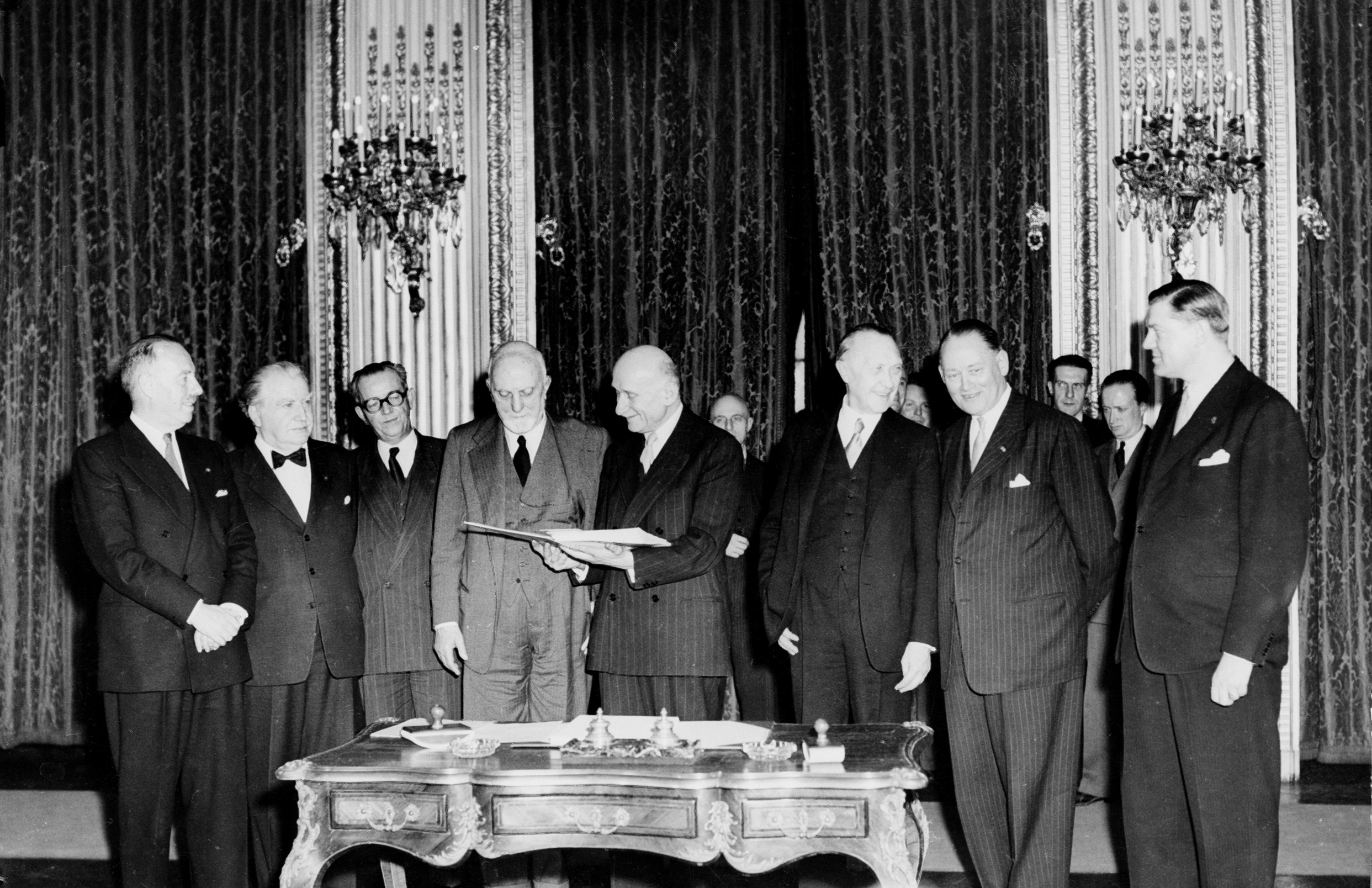
It might seem obvious, but it’s worthwhile repeating it every now and then: the European Union isn’t a fully structured community from which a linear policy can be expected, as is the case of other great powers that can rely on a fully-defined history. Critics often overlook this aspect. It’s not the case of expecting from the EU what it cannot afford owing to its specificities. Its peculiarity resides in the fact that the EU is in the midst of a creation and unification process, which notwithstanding its goal of its unity, with progress in certain areas, is still far from being complete: although 65 years have passed since its creation. This new form of “res publica” still lacks cohesion and coherence, which many Europeans long for. It’s a complex process that unfolds at various levels. On the concrete, “material” plane, namely, at political-institutional level, it had been necessary to persuade future member States to ensure the common management of coal and steel production. Decision-making processes thus demanded relevant procedures and institutions, stipulated in the Treaty that established the European Coal and Steel Community (enforced in 1952). It was followed by an attempt to draw up a constitution for a political union that included also the area of defence witin the integration process, namely, the union of the armies of the first six founding member States. Despite the failure of this major project (European Defence Community, 1954), the process under way continued to develop, proving to be extremely dynamic. Important areas of the economy – notably agriculture – were already envisaged in the treaty that established the European Economic Community (that came into force in 1958) as integration areas. Such “concrete integration” continued in the following decades. After that, an increasing numbers of areas underwent common European management and adopted a legal framework, until the establishment of a common currency with the Maastricht Treaty (enforced in 1993). A dynamic development took place also at territorial level. The six original member States included in the Community through various adhesion stages increased to include 28 member States. Progress in the field of material and territorial integration has always required the introduction of new institutions, tools and procedures, provided for in a set of treaties and reforms, until the Lisbon Treaty (signed in 2007, which came into force in 2009). Moreover, the integration process under way doesn’t take place only in the three above-mentioned areas whereby the changes are particularly visible, as stipulated in member States agreements. Also on the cultural plane, on the wake of the unification movement, transformations are ongoing, but not in terms of the creation of a “unitary culture”. Rather, in the direction of the development of a new culture of mutual understanding, communication and sharing. National societies in Europe are moving towards each other without loosing their peculiarities nor their identities. All this takes place not without setbacks and drifts, owing to a set of far-dated barriers along the path of unification followed by a significant number of nation-states. The goodwill and the enthusiasm of the promoters of the process have never enjoyed full support by all European citizens. Under the impact of the crisis – which owing to a monetary union with scarce resources has been affecting Europe for many years -current debates seek to identify the meaning, significance, the needs and the prospects of such process. National prejudices, believed dead and gone forever, have come back to the fore. Too many politicians seek to conceal their responsibilities by launching accusations and recriminations. The alleged defence of national interests has returned to prevail, and replaced the quest for common European interests. The belief that the integration process should continue all the same and that the ongoing economic downturn will be overcome just like the previous ones, after which the EU grew stronger, could repose on the very complexity and dynamicity of the process itself. In fact, owing to its dynamicity the process cannot be stopped, and because of its complexity it will not be disrupted. The major political, moral and material contributions that have been invested by member States in this process suggest that the “point of non-return” has been crossed a long time ago. To complete European unification and thus ensure peace, safety, and the prosperity of European citizens in a permanent manner, will continue being a common goal also in the future, despite all interactions and difficulties.
