ECONOMY
Solid recovery is still far away, but some countries advance at a speedier pace

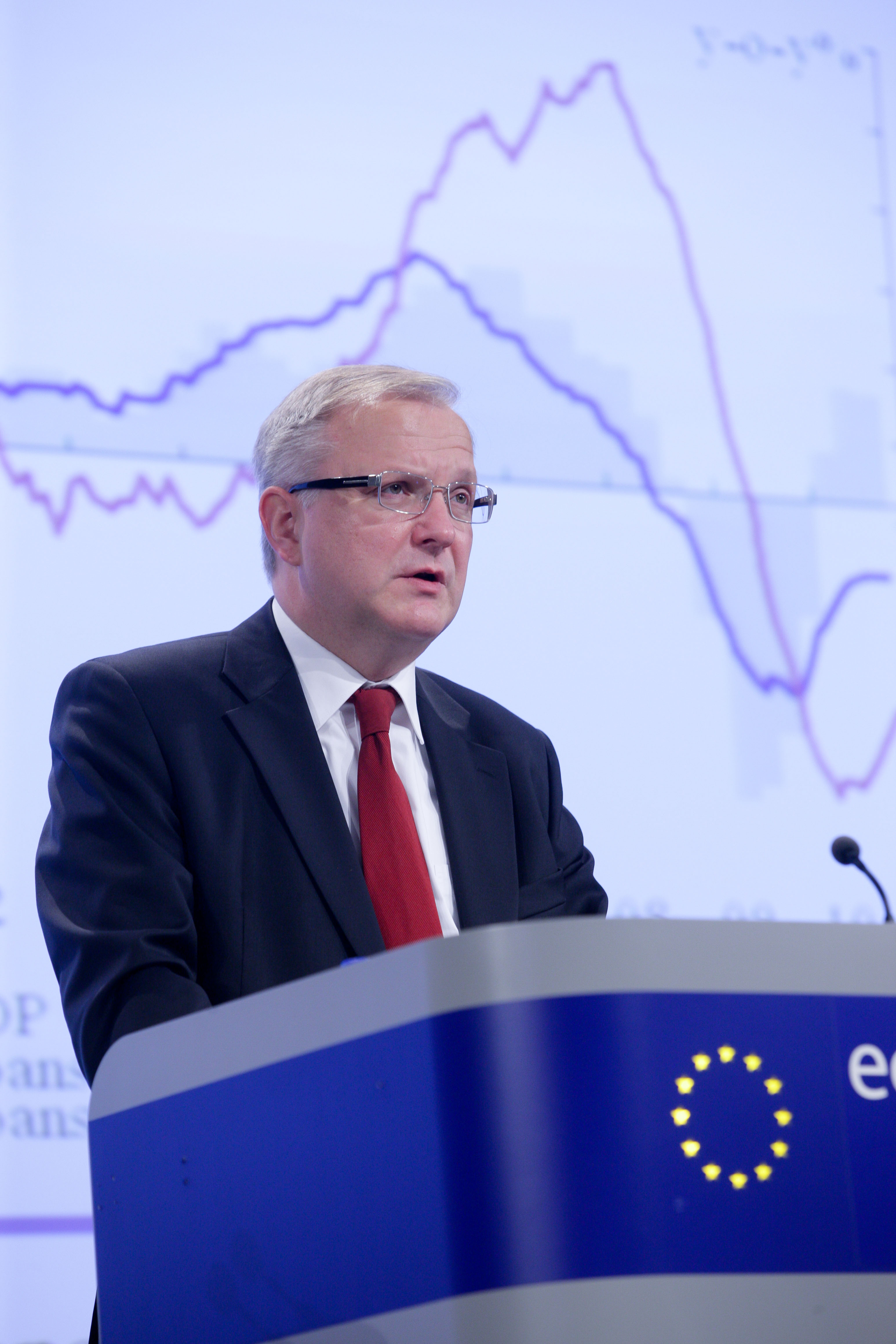
Gross domestic product is starting to grow again, albeit at a very slow pace, while employment measures seems to have been postponed to the end of 2014. Indeed, the “Winter Economic Forecasts”, the lenghty document submitted by the Commission to monitor the situation in the EU on 25 February, doesn’t leave much room for imagination. Moreover, signs of “moderate recovery”, following six years of economic downturn, don’t involve all EU member countries. The picture is so unpredictable that the Commissioner for Economic and Monetary Affairs Olli Rehn is walking on eggs. She cautiously speaks of “progress”, but invites not have any illusions, and above all not to lower the guard: substantial rigor is needed in the management of public accounts, accompanied by bold initiatives for growth, investment and … a bit of luck. Small signs of hope. “Recovery is gaining ground in Europe, following the return to growth in the middle of last year”, said Rehn. “The strengthening of domestic demand this year should help us to achieve more balanced and sustainable growth”, added the Finnish Commissioner. Rebalancing of the EU 28 European economy “has been progressing” and “external competitiveness is improving, particularly in the most vulnerable countries”. Even though “the worst of the crisis may now be behind us, this is not an invitation to be complacent”. The Commissioner goes on: “the recovery is still modest. To make the recovery stronger and create more jobs, we need to stay the course of economic reform”. For the Executive, “after exiting economic downturn in spring 2013 and three consecutive trimesters of weak recovery, growth is now expected to undergo slight acceleration”. According to figures released by the experts in Brussels, in 2014 GDP is now projected to grow 1.5% and 1.2% for the eurozone “to reach “2.0% in the EU and 1.8% in eurozone countries” in 2015. The achievement of these outcomes requires budgetary discipline in national accounts, to continue the planned reforms whilst hoping that the global picture remains favorable. The Commission intends to monitor price levels in order to prevent deflation- risk. High unemployment drags on. As it always happens when it comes to the economy, not everything passes by numbers or charts. And not everything is consistent with mathematics. “Feelings” play an essential role. In fact, even a slight improvement in macroeconomic data could determine a “confidence” increase (an intangible yet indispensable element to exit the crisis), bringing domestic consumption to mark a plus sign; mounting GDP could have a “remote” impact to lessen the pressure of government debt, thereby decreasing interest rates and current account deficits. It may slowly loosen the credit crunch, thereby promoting investment and, with them, the productive activity and employment could – the use of the conditional is a must – start growing again. On this aspect the “Forecasts” leave no room for imagination: “The labour market is characterised by slowly stabilising employment, with unemployment remaining high, as labour market developments typically lag those in GDP by half a year or more”. Thus the outlook is for “a decline in the unemployment rate towards 10.4% in the EU (decreasing from 10.7 today) and 11.7% in the euro area by 2015” (now at 12.0%), with “cross-country differences remaining very large”. Some are better off than others. The comprehensive charts presented by Rehn, however, highlight the huge differences between various economic systems. Among the larger countries, Germany ‘s overall picture is solid, and the UK has performed well; France and Poland have delivered mixed results, while Spain and Italy reveal situations that are far from reassuring. As for GDP, Berlin’s performance is good, with a +1.8% this year and +2% in 2015. The UK’s performance is even better, given a 2.5% increase forecast for 2014 and 2.4% in 2015. France and Spain’s GDP are expected to remain below 1.0%, while Italy will have to be content with 0.6%. Poland registers +2.9%, but the most remarkable recovery was registered in Latvia (+4.2%). Negative forecasts for Cyprus that remains in a state of full recession with -4.8%; while in terms of labour Germany still has much to teach, with an unemployment rate of 5.2%, compared to Greece and Spain at 26.0%, and Italy (12.6%), France (11.0%). Negative unemployment rates were recorded also in Croatia, Portugal, Cyprus, Bulgaria, Slovakia, Ireland. And while national deficits tend to return under control, government debt – a legacy of the crisis – remains high, topped by Greece (177.0% of GDP) and Italy (133.7), followed by Cyprus, Ireland and Portugal, all countries above 100% of GDP. A clear signal that there’s still a long way to go to overcome the crisis and secure full recovery.
