CHURCHES IN BRIEF

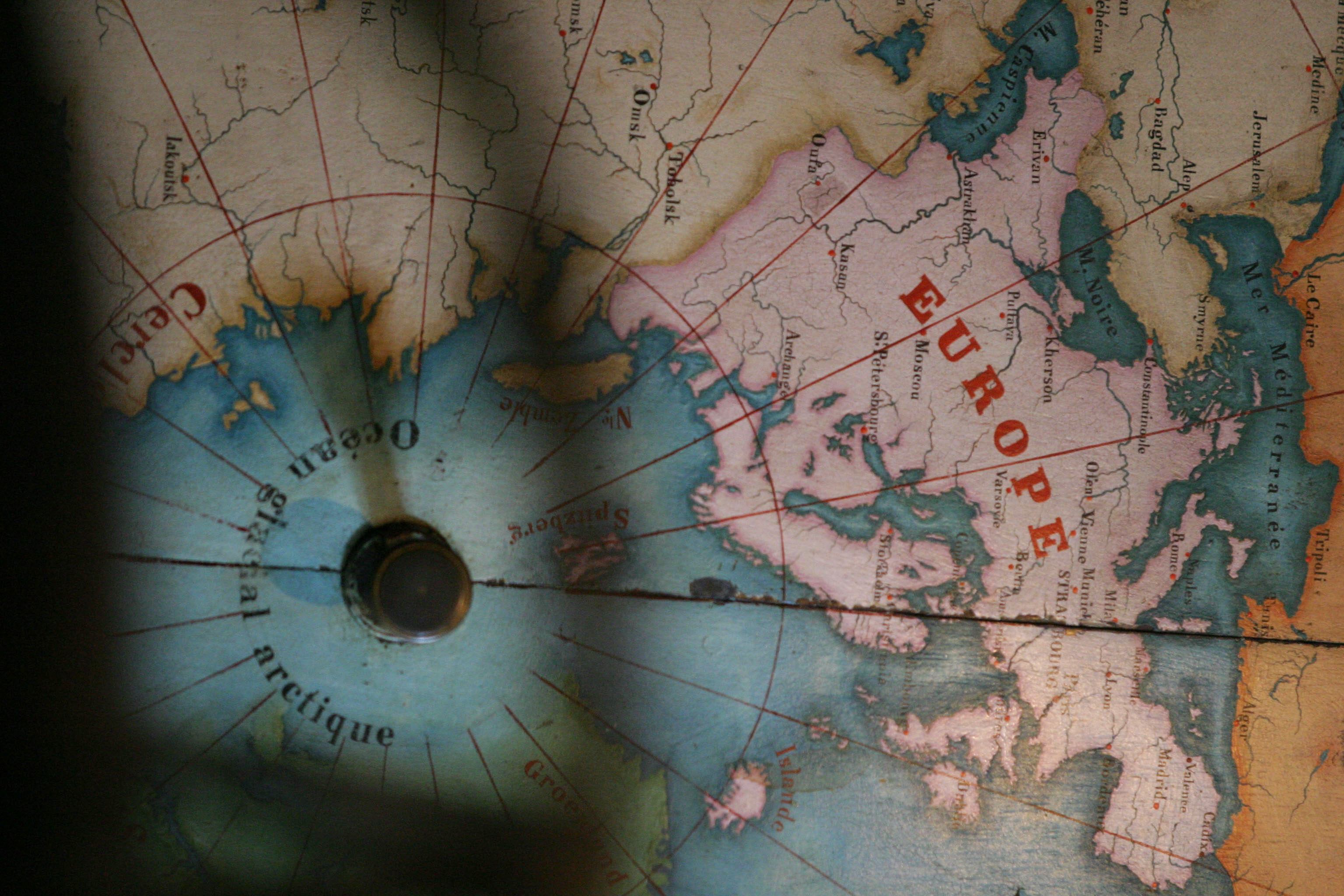
Belgium: Social weeks on the future of Europe “Europe. The time of responsibility” is the theme chosen for the fifth Social Week that will take place in Belgium, Oostende, January 23-25. The event will be opened by the chairman of the European Council Herman Van Rompuy with a speech titled “Europe Together, lets unite our forces” and by Cardinal Peter Turkson, president of the Pontifical Council Justice and Peace, whose opening address focuses on “Christian social ethics to guide the current challenges”. “We all believe in the need for new decisions, for a politics that prompts new opportunities for all European citizens”, said Jaap Smit, president of the promoting Committee of the Social Weeks. We are facing a situation in which 25% of young Europeans are unemployed or uncertain about their future. The economic crisis in Europe worsens their situation. The number of men and women who live in a state of poverty continues increasing, and current European responses are insufficient”. The purpose of the Social Week in Belgium is to spark off a debate between experts in economics, politicians and representatives of associations of civil society also from other Countries, to discuss the limits and flaws of the current social and economic system along with the possibilities of implementing a new “European social model”.. Info: www.esw5.eu. Statistics: a “snapshot” of the Church in Austria As of December 31, 2013 5.310.000 Catholics had been censed in Austria. The number of faithful has remained unaltered compared to 2012. The official figures of the Austrian Church, published past January 14, show the lights and shadows linked to the situation. According to the survey the number of Catholic faithful – which in 2012 amounted to 5.360.000 – decreased by 0.94%. The number of those who left the Church has slightly increased in 2013 compared to the previous year, but the dioceses highlight various trends: some registered slight decreases while others were marked by abjurations. To this regard, a total of 54.845 people have left the Catholic Church, while as of December 31st 2013, 4.679 people have been either readmitted or have officially entered Church registers for the first time. Relevant factors in the slight decrease in the number of Catholics include lower birth rates. The pastoral action of the Church is substantially “stable”, states the report. In fact, while there are fewer priests (4.035 in 2011, 3.998 in 2012) the parish network remained the same with as many as 3.125 parishes and 1200 chaplaincies, including monasteries and Catholic institutions. On the front of sacramental pastoral care, the number of baptisms registered a slight decrease (from 49.275 in 2011 to 48.645 in 2012) and so did the First communions and Confirmations. Positive trends include increasing marriages celebrated in church (51.556 in 2011, 53.136 in 2012) and the presence of faithful in liturgies. At financial level, the budget of Austrian dioceses has slightly increased, which confirms that Austrian Catholics continue reposing their trust in ecclesial institutions. Portugal: Baptism unites Christian Churches On January 25 the representatives of Portuguese Churches – Catholic, Anglican, Presbyterian, Methodist and Orthodox – will sign a statement on the mutual recognition of the sacrament of Baptism. The agreement will be ratified during a national ecumenical celebration that will take place in the Lusitan capital of St. Paul, chaired by the Patriarch of Lisbon, Msgr. Manuel Clemente, who will also carry out a reflection after the liturgy of the Word. Presenting the initiative to the press with a view to the Week of Prayer for Christian Unity, Msgr. António Couto, president of the Bishops’ Commission for Mission and New Evangelization, declared that it represents “a further step in the progress of ecumenical dialogue between Churches, which crowns many years of work in that direction”. “It’s a concrete act, with which we intend to reaffirm many common things that already unite us in Christ, as we’re all His disciples, a single people of baptized faithful called to be in the world and for the world a credible sign of the Gospel”. With the purpose of strengthening the communion of Christian faithful, the ceremony for the mutual recognition of Baptism will take place “in an orating context” that “will bring together young people and representatives of Christian confessions listening to the Word, in the assumption of a clear and determined commitment for the cause of Christian unity”, concluded Msgr. Couto.
