GERMANY" "
The new president of the German Catholic workers’ movement

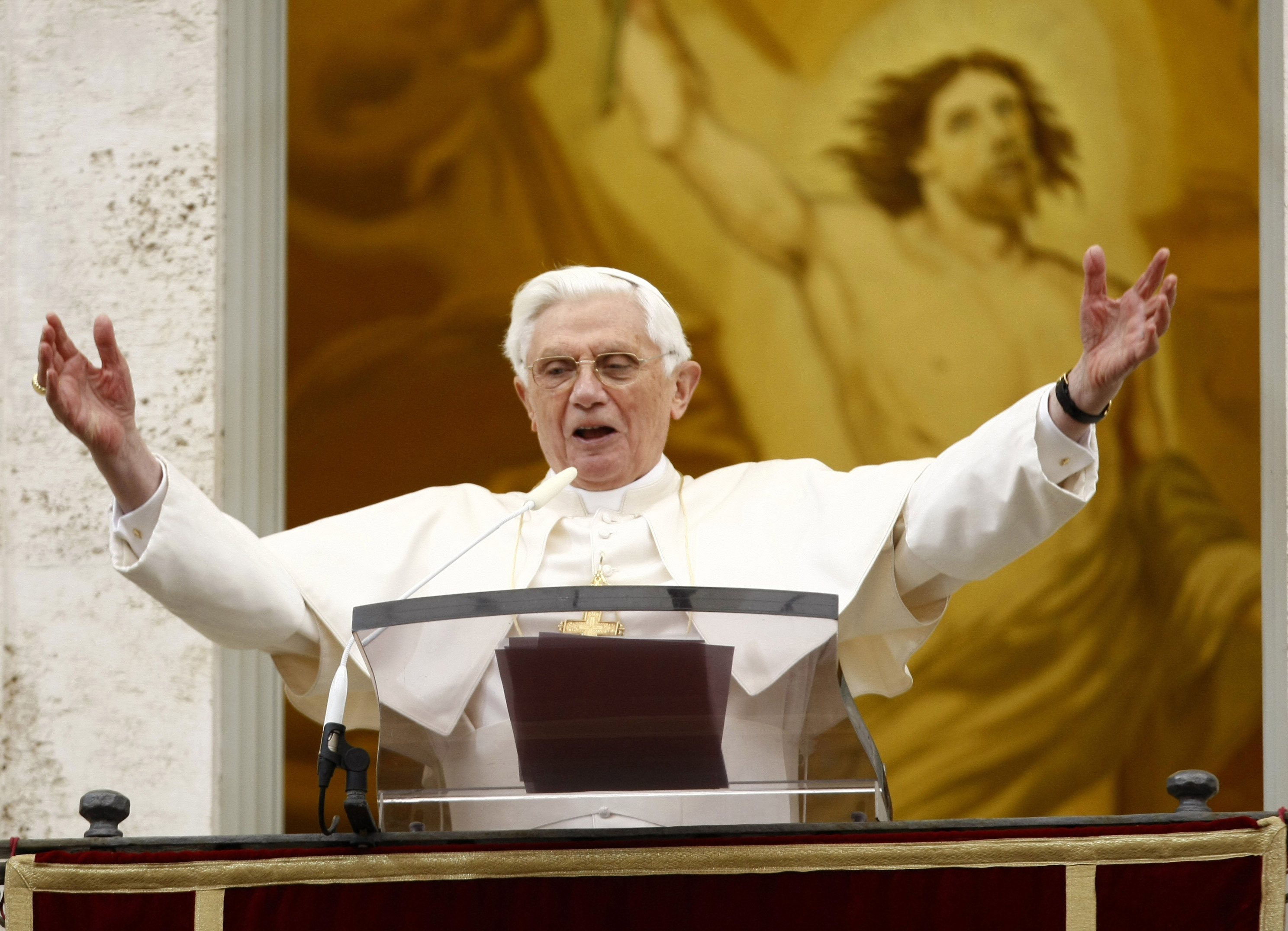
The KAB (Katholische Arbeitnehmer-Bewegung), the German Catholic Workers’ movement, was a main actor in the debate on employment measures and the subsequent requests to the new German government. KAB is actively engaged across Germany in close contact with parishes. It provides advice for workers, and acts as a movement for culture and spiritual formation. Blessed Nikolaus Groß, martyr of the anti-Nazi resistance, was the leader of the mining and metals movement linked to KAB in Ruhr’s industrial region, and is taken as a role model for all its members. Massimo Lavena, for SIR Europe, interviewed Regina-Dolores Stieler-Hinz, the new national president of the association. What is KAB’s role in Germany today and how is it related to the various political, union and industrial sectors? “With some 120 thousand members, KAB is a strong federation. We too have to face the challenge of being capable of attracting future generations to continue the promotion of social equity on all fronts. This is important since in Germany, as in Europe and all over the world, we are experiencing a deep social fracture, along with the economization and the exploitation of all existential factors of persons and of the Creation. Politics alone is unable to establish rules for social equality at international level, in a globalised industrial and financial world. For this reasons as KAB, as Christians, as Church and as members of a world movement for social justice, we are the ones who are called to carry out responsible social justice in the understanding of social Christian ethics. In this sense, the recent apostolic letter of Pope Francis supports us and motivates us to continue pursuing this path”. How can the Catholic world renew its presence within workers’ associations?”It would be already important to refer to the document by Pope Francis. Strengthened by his exhortations, we should refer to the foundations of our movement i.e. Church social doctrine, with greater awareness, as it contains the answers to the urgent questions of our times. In Germany we are committed to furthering Church social engagement in the light of the new challenges and changes in the field of labour. The Churches, along with Catholic associations, have a special task. KAB, representative of the world movement of Christian workers’ associations, is part of the process of renewal, its experience represents an important contribution to this regard, exemplified by the cooperation with Italian ACLI at European level”. The problem of social equality and equal access to education have always been among your major commitments: what do you think should be done in the light of Germany’s partial political and economic isolation compared to the rest of Europe? “We should consider the current divide which affects young people in Europe, notably in Spain, Portugal, Greece and Italy, with high unemployment rates. As a European movement, KAP aims at qualified and free education for all young people in Europe. The increasing economization of education in Europe should come to an end, while it is necessary to extend the scope of the equivalence of qualifications and diplomas across European countries. Indeed, Germany should recognize its ‘particular position’ in a chain of solidarity with all of Europe. Germany’s special role should not bring a special status which involves isolation. Rather, it should prompt economic perspectives for other EU countries. Germany has a special responsibility for Europe. This role has not always been carried out fully by the Federal government”. The commitment for the benefit of workers with low wages, the reception of migrant workers, finding a job for refugees: what could be KAB’s present areas for action?”At practical level, a large number of KAB local offices are providing assistance to the refugees. From a political angle it is a primary issue for KAB, as it is a Christian social association. Germany is a land of migration and thus it is very important to promote integration. ‘Changes, migration, flight and marginalization are not temporary phenomena’, states the 1997 joint document of the Churches (ecumenical document of the Catholic and evangelical Churches on migrant and refugees drawn up with the support of KAP in 1997 – ed.’s note). Mindful of the tragedies of refuges in the Mediterranean, KAB is engaged in providing humanitarian aid to refugees and furthering human immigration policies in Germany and all over Europe. In Germany KAB supports the proposal of dual citizenship for the promotion of integration and coexistence of migrants and their active participation in our society”.
