SWEDEN" "
The government, as it emerged from the September elections, has already collapsed. Elections in March. The nationalist front is growing. The knot of migration

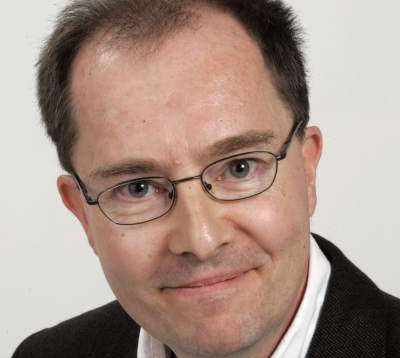
Swedish politics is going through a crisis less than two months since the new government took office. Elections are tabled for March 22. It didn’t happen since 1959. The government led by Social-Democrat Stefan Löfven came to an end after the financial bill failed to pass through when the Swedish Democratic Party (SD), of nationalistic nature, voted along with the opposition criticising the decision of the Löfven government in the area of migration and school system. Nobody – to the left and to the right – wanted an alliance with SD, the third party at the September elections (13%). Theirs was almost a revenge, a show of strength- The political future is “open”, remarked Ulf Jonsson, Catholic philosopher at the Newman University Institute of Uppsala, interviewed by Sarah Numico for SIR Europe. Indeed, the difference “between the two political blocs”, Socialists and Greens on the one side and Liberals and Conservatives on the other, “is rather small”. A lot will depend “on the attitude of the nationalistic Party”. The Council of Churches has proposed to Christians a prayer for the situation and for political leaders: “It is our duty; it’s a very awkward, unstable situation, that occurred only on rare occasions throughout our history”, Jonsson said. How did it happen that the vote of 49 Swedish Democrat MPs caused the government’s collapse? “They exploited the complex Riksdag voting regulations to block the government’s financial policy. Moreover, such a high number of parties in Parliament (8 all together) are anomalous for Sweden. And no party was willing to negotiate with the nationalists, so they used all means to influence politics”. Could premier Löfven have avoided the crisis? “He would have had the possibility if he had obtained the support of Conservatives and Liberals, who were members of the Alliance in the previous government, and negotiate the budget with them. But these two Alliance parties refused to break up the previous government coalition. Immediately after September’s elections, it was widely agreed that the new government would have had a major challenge to face”. What will change in the new electoral campaign? “It’s hard to tell. Some commentators say that March’s elections will deliver the same results, but the constituency is very unpredictable. A recent survey showed that a third of all voters are still undecided, and this percentage could deliver significant changes. In the last elections nationalists had attracted many votes of the Conservative Party (that dropped by 6.7%). But now the Conservatives will try to regain those votes and it’s not impossible”. In the meantime the popularity of the nationalistic party is growing… “Indeed, they gained increasing consensus over the past few years. The nationalist movement has always been very small in Sweden. The rapidity of this evolution however also makes it very unstable”. Is migration the most controversial theme? “In fact it has become a major issue in the debate, also since the SD have criticized the fact that in Parliament, political party members address it from a pragmatic standpoint and not as a multifaceted problem. But now the moderate Party has appointed a new leader, Anna Kinberg Batra. If in January the party should elect her, she will succeed former Prime Minister Fredrik Reinfeldt. Batra has already made know that she will address the migration question also in relation to culture, integration and social cohesion”. Does the political debate address other issues? “Education, along with the reform of the school system and higher education, is another hot issue. Our school system has grown very weak. Another knot is the entire health system and the care of the elderly”. What do the Churches say about this situation? “Swedish society is a very secularised, so the Churches play a minor role. There are many charity initiatives, through the organizations that deal with people in difficulty. The Lutheran Church, which until the year 2000 was a State Church, and to which 70% of the population formally belongs, is involved in many social areas. But it does not belong to the Swedish tradition that Churches speak out in the political debate”.
