EDITORIAL/2
European bishops will convene on November 11 to commemorate the fallen of the First World War and to pray for peace ” “

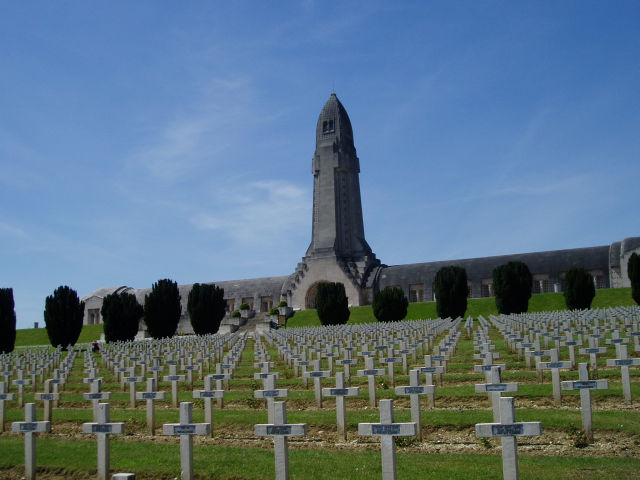
The Battle of Verdun in 1916, in which over 300,000 died, became a symbol for the futility of the gruesome slaughter of the First World War. In the chapel of the ossuary of Douaumont, in which the bones of 130,000 unidentified French and German soldiers are kept, the bishops will celebrate a religious service. To end with, Vespers will be sung in the Cathedral of Verdun in memory of those killed in the war. These memorial services can become an occasion for a critical review of the role of the churches at the start of the First World War 100 years ago. Karl Barth, the Swiss theologian of the Reformed Protestant Church, observed that after the outbreak in 1914, “love of the Fatherland, war-mongering and Christian faith” had become hopelessly entangled. In the churches in each of the countries that fought the war, nationalism triumphed over faith. The Churches in France perceived their nation as the party under attack and therefore confidently designated their war of defence as a “holy” war. The churches in Britain took the position that Germany had fallen away from God; hence, a war against the Germans was godly. The Russian Orthodox Church echoed this, even going as far as to declare Kaiser Wilhelm II the Antichrist. An ancient icon of the Mother of God was carried to the war front to ensure that God would be behind them in battle. On 25 July 2014, the German Bishops’ Conference published a statement on the start of the First World War 100 years ago under the heading “Overcoming the self-interest of nations developing the order of peace”. The bishops candidly recognise that: “We know today that many people, including those high up in the Church, brought guilt upon themselves, failing in the national blindness to perceive the suffering of the war’s victims, and realising too late the consequences of absolute loyalty to their respective nations. Even after the Second World War, the spectre of war still stalks Europe as we know from the wars in former Yugoslavia. Here once again, nationalism and religion have combined with disastrous effect. The most recent crisis in Ukraine clearly demonstrates that peace in Europe can by no means be taken for granted. In their statement, the German bishops emphasise that European integration in the form of the European Union after the Second World War has provided an answer to the questions so clearly raised by the First World War. Just looking back at the horrors of war should provide an incentive to cling to this project and prevent any relapse into one-sided nationhood. The Australian historian Christopher Clark, who in his book “The Sleepwalkers” analysed the causes of the First World War, calls the European Union “one of the greatest achievements of mankind”. To those who harbour doubts about the European Union, the new President of the European Commission, Jean-Claude Juncker, offers this recommendation: visit a war cemetery.
