25 YEARS AGO IN BERLIN
The German lesson was useless as new barriers added on to the old ones. It happens even between Spain and Morocco, in Greece and in Cyprus…” “

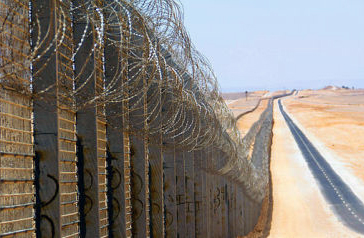
The Berlin Wall collapsed 25 years ago, on November 9 1989. But other important walls – such as those separating North and South Korea – which since 1953 marks the point of separation between two worlds, as well as between two Countries, have not fallen. On the other hand – and in the meantime – more walls have been built, in Europe as well. The separation between conflicting peoples, between the rich and the poor, between the first world and the third world, between those who seek to migrate because the are in need or to build a dream. Walls that violate people’s fundamental rights to health, education, work, food… walls that sometimes separate communities and families. These are just some of today’s walls, erected on the same recurring pillar: fear. The Israeli case. In addition to the known wall separating Israel and Palestine, dividing Arabs and Israelis, in the past years the Israeli government led by Benjamin Netanyahu, riding the wave of an electoral support at the expense of thousands of desperate people fleeing war, persecution and misery in the Horn of Africa (Sudan, Eritrea, Ethiopia, Somalia), had the bright idea of building a wall between Egypt and Israel, in the Sinai desert. The reason is to “preserve the Jewish, democratic nature of the State of Israel”, without inundating the Country of “illegal immigration”. The barrier is approximately 15 Mt. high and 245 km long, it extends from Rafah to Eilat. It’s a success for the Israeli government, since six months after the 2013 elections only 34 people had managed to enter the Country illegally; 10 thousand illegal migrants had entered the previous year. All refugees, after having crossed the desert find themselves in the hands of the fearful Sinai marauders, who demand family members in Europe exorbitant ransoms for their release. Meanwhile they beat them, torture them, rape the women, kill men and even children for organ trafficking. The few who manage to escape from such horrors, find themselves in front of the wall. Between USA and Mexico. A notorious wall is the one separating the United States from Mexico, erected to prevent the entry of all migrants from Central America. For Mexicans it’s “the wall of shame”, for US citizens it represents safety from constant invasion. The barrier, whose construction began in 1994, is now 3141 km long and not yet completed. It runs along the border between Tijuana and San Diego. It consists of a reinforced concrete base with an upper metal sheet structure with high intensity lighting, electronic sensors and night vision devices. It’s 2 to 4 meters high. Most of the unfortunates who seek to cross it are met with death: from 1998 to 2004, according to official figures, 1,954 people have lost their lives. And who knows what the figures amount to since then. Hundreds of thousands each year are arrested at the border and an equal number are rejected. The situation in Europe. With the same approach and for the same reasons – to prevent the entry of African migrants in Europe – a wall was erected between Ceuta and Melilla, integral parts of Spanish territory located in Morocco. Here, too, there have been countless deaths and rejections. In Cyprus there is a Green Line, i.e. the dividing line – formed in part by an actual wall as well as by barbed wire and by “no man’s lands” – which divides the southern, Greek-Cypriot part of the island, which in 2004 joined the European Union, from the north, that in 1974 was occupied by the Turks and became a self-proclaimed independent state. The latest is the wall between Greece and Turkey still under construction, to prevent the entry of Asian migrants. Less-known walls. There are less-known walls, such as those separating India and Bangladesh that runs along 4000 km, or the 2700 km wall in the Sahara desert, in the disputed territory between Morocco, Algeria and Mauritania; as well as the many small walls such as the ones that in Brazil separate rich neighbourhoods from the favelas, as a defence from crime. Since 1978 in San Paolo stands the Alphaville wall, and many other walls were erected in large cities such as Rio de Janeiro and Salvador da Bahia. To celebrate the anniversary of the fall of the Berlin Wall one can refer to a phrase by historian Frederick Taylor: “You can stop people, you can set limits, but they will always find a way”.
