POLAND
The martyr priest remembered 30 years after the murder by the Communist regime. A priest in love with his Country

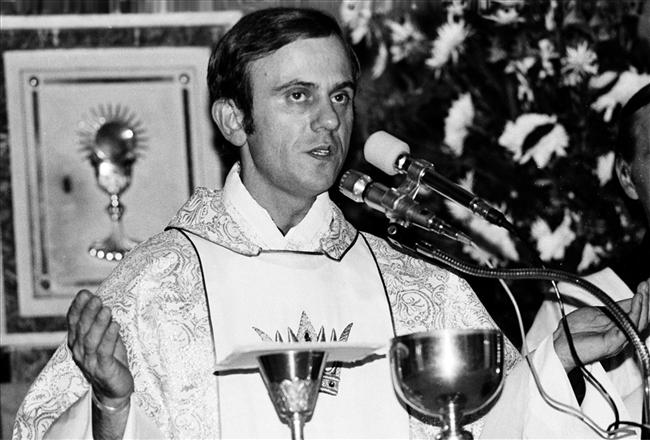
On the occasion of the thirtieth anniversary of the martyrdom of Fr Jerzy Popieluszko, (killed October 19 1984 by intelligence officers of the Polish Communist regime), on October 15 the Catholic University in Warsaw held a meeting dedicated to the martyr-priest. Introducing the debate, Cardinal Kazimierz Nycz observed that in the past century Poland made itself known “thanks to three personalities of the Church: Pope John Paul II, Saint Faustyna Kowalska and Fr Jerzy”, whose life “should be seen from two complementary perspectives, the theological and the historical one, in terms of the circumstances of the martyrdom inflicted in odium fidei”. Anna Kowalewska has interviewed for SIREurope one of the speakers at the conference, Professor Jan Zaryn, scholar on modern Polish history. At the recent conference promoted at the University of Warsaw were present many young people: does the figure of Fr Popieluszko trigger the interest of contemporary youths? “The assembly hall of the atheneum was indeed packed with people. There were college students along with high-school pupils who arrived with their teachers from many different cities, also from very far away. The participation of young people despite the fact that the purpose of the conference was to present the latest findings of scientific research on the activity and death of Fr Jerzy, filled us with joy. Many of them arrived to gather more information on the story of this priest, whom until then they only knew by name. Such a large presence of students may be a sign that the martyr-priest is a figure that is also known by the young generations”. Which values attract these young people? Many of them have living memories of the “Masses for the homeland” celebrated by Popieluszko in the church of Saint Stanislao in Warsaw since 1982, where participating was almost a national and Christian obligation… But do today’s youths, born in a sovereign Country, nurture that same love for Poland? “After speaking with young people I had the impression that many of them represent the large, future elite of the nation. Those who today are aged 15-23 are attracted by history, especially the recent one, precisely because of its charge of patriotism. In their eyes the figure of Fr Jerzy, is a figure that must be imitated not only in its pastoral dimension but in consideration of the meaning of the entire life of that priest, a great Polish patriot. Today the value of patriotism is object of many attacks but especially among the young it prompts a great contrast. Fascinated by the tragedy of Polish martyrs killed by the Communist regime in the 1940s and 1950s, contemporary youths wish to rediscover their stories and preserve them for future memory. Fr Jerzy’s entire life and martyrdom belongs to the tradition of Polish priests open to martyrdom for reasons bound to faith and to the support of those who risked their lives for the nation. It was the case of the chaplains of Armia Krajowa (national Army), who carried out their pastoral mission during the revolt of Warsaw in 1944 and in the previous centuries. Popieluszko is the witness of the love of a man and of a priest for his Country. This testimony is very important today when young people become aware of the destruction of the code of ethics in the public arena and don’t want to live in a world without moral values”. How could we define the essence of Polish patriotism? “Love for the homeland is a very important element of contemporary public discourse, it causes tensions and it is the object of many discussions. Some representatives of intellectual Polish elites believe that preserving an attachment to history and to national heritage is a fixation, and that we should finally ‘become Europeans’, relinquishing the burden of a bygone past. This message is however in sharp contrast with the Polish people’s attachment to national history, as they consider the legacy of past generations a contribution to their identity. But it should be said that only recently have we been able to enjoy full sovereignty and freely discuss these themes”. Could this discussion on patriotism be useful for Europe? “It may certainly be. I believe that we are identifiable and interesting precisely because of our typical traits rather than for the traits that we share with others. In Poland, our distinctive traits also consist in figures like Fr Jerzy, representing a Polish way to face the responsibilities of life. Popieluszko was a priest ready to become a martyr for faith and for his love of Poland. His martyrdom in the 1980s, thus in a not too distant perspective, shows that evildoing is not a feature of the times of the first Christians, as it still exists throughout Europe”.
