ECONOMY
The analysis by economist Alberto Quadrio Curzio. Also the “engine” of Europe risks a sharp stop. Need for investments” “

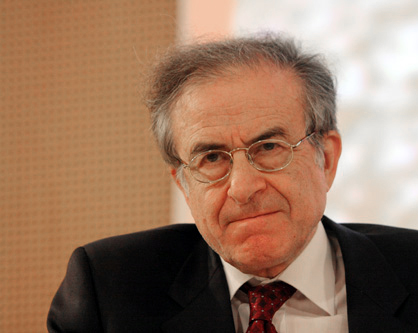
Over the past months there has been an incessant bombardment of negative news on European economy. On the other hand, Germany seemed to collect one record after the next when suddenly, it became clear that also German production is decreasing and that Eurozone’s “leading Country” is at recession-risk. To learn more about the situation Luigi Crimella for SIR interviewed Italian economist Alberto Quadrio Curzio, expert in international economy. For a long time the media has been speaking of this crisis, said to be worse than the Depression of 1929. Is it an accurate picture? “It’s never easy to draw a comparison between different crises. However, comparisons may serve to expound interventions aimed at overcoming the crisis. Europe and Eurozone Countries are going through a serious crisis. In fact, in the period 2009-2013, Eurozone GDP fell by almost 2%. In the same period, US GDP rose by 7.5%. As for unemployment, in the Eurozone it rose by almost 3% while in the US it fell by almost the same percentage points. This means that the measures adopted by Europe to counter this situations proved to be ineffective. In fact, they have been detrimental”. Is it really Germany’s “fault” as some say, owing to its emphasis on rigour and balanced budgets, thereby blocking all possibilities of “flexibility”? “The answer is complex. First of all it must be said that the situation afflicting the Eurozone was completely unforeseen. Such a severe crisis had not been put on the agenda as a possibility. In addition, Europe lacked the tools available in other countries to deal with problems of this magnitude. So Europe chartered a rudderless course and proceeded by trial and error. There is no doubt that in these experimental approaches Germany played a leading role”. What do you mean? “That in a way Germany was ‘hypnotized’ by just one aspect of the crisis, namely, the vulnerability of sovereign debt of the so-called ‘peripheral Countries’ such as Greece, Portugal, Ireland, Spain and Italy. Germany believed that such vulnerability was mainly due to a bad management of public finances in those Countries and thus by consolidating public finances with drastic – almost draconian – fiscal policies, everything would have proceeded smoothly”. Instead…? “It failed to consider that such radical fiscal policies would have determined serious consequences on the dynamics of GDP, and on the ratio between large public finance and GDP, in addition to employment levels. This led to a negative spiral marked by the stagnation of GDP, unemployment, fall of domestic demand and further drop of GDP. One could wonder: how could Germany fail to realize all of this? First of all, because the situation to begin with was much more favourable compared to other Countries, in fact it was improving with the crisis. Moreover, the crisis was favouring Germany. This strengthened the belief that there could be only one recipe: the fear of the fall government bonds of peripheral countries resulted in the flow of huge amounts of capitals into German bonds, determining decreasing interest rates, lower credit and the possibility of investing at ever-minor costs”. But it now seems that this mechanism has stopped functioning even for Germany. Why? “A large part of German exports were directed to the rest of Eurozone countries. But when the domestic demand started to dwindle along with the confidence of other Eurozone Countries, German exports started to misfire. And today, also Germany is experiencing difficulties”. Is it time for Germany to make use of its huge monetary and trade surpluses? “Germany holds foreign securities amounting to 40% of its GDP and has an annual trade surplus of 250 billion euro, which means that its domestic demand does not grow because it has too many unused reserves. According to the International Monetary Fund, current account surplus represents 7% of GDP: that is, a country that lives on exports and on a poor domestic demand. Now we see the first signs that the ‘good times’ are almost over”. What can be done at this stage? “ECB President Mario Draghi has done an excellent job, the best he could do with Germany as an opponent. Now it is necessary to revitalize structural investments in major European undertakings such as unified electric networks, broadband, ports system … The best tool is a public-private partnership: ‘public’ because it has a very long timeframe, ‘private’ because it ensures greater efficiency and profitability. Since 1992, in an essay written with Romano Prodi, I had suggested the ‘Euro Union Bonds’. Now the proposal has been widely re-launched. I hope that a decision in that direction may be taken soon”.
