SLOVAKIA
The yearly “Week of Christian Culture” in ongoing in Zilina. A religious thought in contemporary society

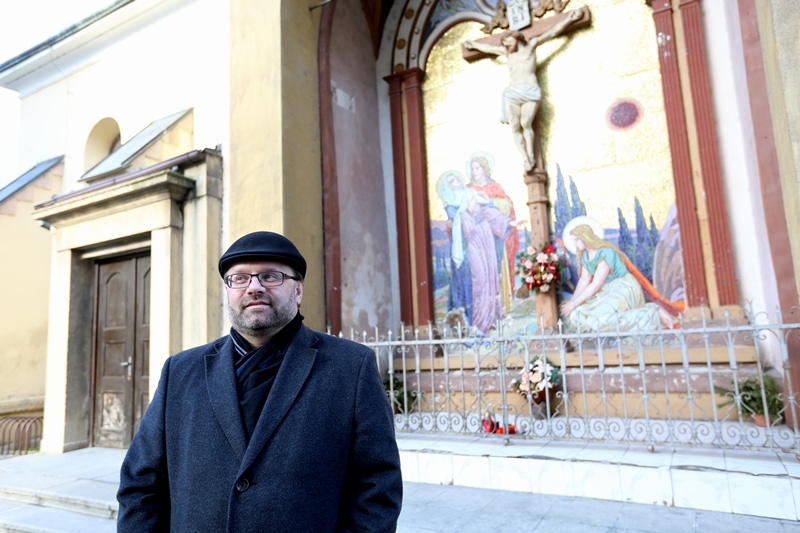
“Christian culture represents a platform for the contact with eternity”, says Fr. Zdeno Pupik, chief editor of the diocesan magazine in Zilina and one of the initiators and coordinators of the Week of Christian Culture currently under way in Zilina until the end of this week. Danka Jaceckova, our correspondent from Bratislava, has interviewed him on current state and challenges of Christian culture in contemporary society. Where should we seek the roots of the Week of Christian Culture in Slovakia? “I have found the inspiration in Italy and Poland – both countries where the Church places great emphasis on culture. I consider the respect towards this area to be a crucial issue for Church activities. We don´t exist in a vacuum, but within the framework of a concrete culture in a concrete historical period. The Church´s activity should not consist only of the transmission of doctrine, but notably of enculturation, which means gradual penetration of the Gospel into the everyday life of individuals, families, communities and the whole of society. Here in Slovakia we learn how to discover the platform of culture in the process of new evangelization. That´s why our decision to organize the Week of Christian Culture in Zilina on an annual basis, consisting of discussions, conferences, lectures, exhibitions, concerts, book presentations – to offer an opportunity in our pluralistic society to get involved also in other than liturgical events that could possibly draw the attention and interest of people within the Church as well as outside it. The main topic of this year´s edition of the event is the renewal of the covenant. Just like Joshua renewed the covenant of Israel with God, we want to give our contribution to overcome our own limits, by offering a platform for the contact with eternity”. What actually is Christian culture from your point of view? Some kind of personal reflection… “When we speak about culture, I see it within a much wider dimension than just the artistic one. Christian culture basically encompasses the whole Christian lifestyle. Christianity contains elements of rationality, as well as those elements that transcend this dimension. Christian culture offers not only coherence in this regard but helps us meet our Creator and Sanctifier. It helps a man to discover living God and Christ. All this is necessary for human life. Perhaps that´s why St. John Paul II said that culture is everything that helps man become himself. Christian culture is inspired by the Bible and by the lives of the saints – lives of the people living in the Holy Spirit. It should refine intelligence, develop the freedom of individuals and nations. It should reach us in our entirety: our brain, heart but also our body”. What do you think about culture as a place of “reconciliation” among Christian and secular world? What are the main challenges in this regard? “I am convinced there is an interconnection of three phenomena that mutually influence one another: faith, culture and education. Many topics and opportunities for a dialogue with secularized society were outlined also by the Holy Father Francis in his exhortation Evangelii gaudium: education, common good, social justice, but also bioethical questions, family or dignified life of seniors. I don’t want to state the obvious, but a difficult task lies ahead for Europe: to rediscover its identity. We should look into the past, but most of all we should have courage to draw the vision of its future development. Because currently it is in a standstill. Sociologists say that we live a ‘silent’ period that should be followed by a concrete program or at least some outlined direction. If European identity consists only of piled-up experiences of individuals, communities and nations without any coherence, there is nothing that really unites us and the European civilization is on its way to decadence. The potential is hidden in individuals and institutions, in freedom, creativity, communication and collaboration. Culture creates a frame determining the life of individuals, families, communities and the whole of society. Christianity has the capacity to stimulate faith, hope and love – values that are inherent to each person and that humanize us”.
