CHURCHES IN BRIEF

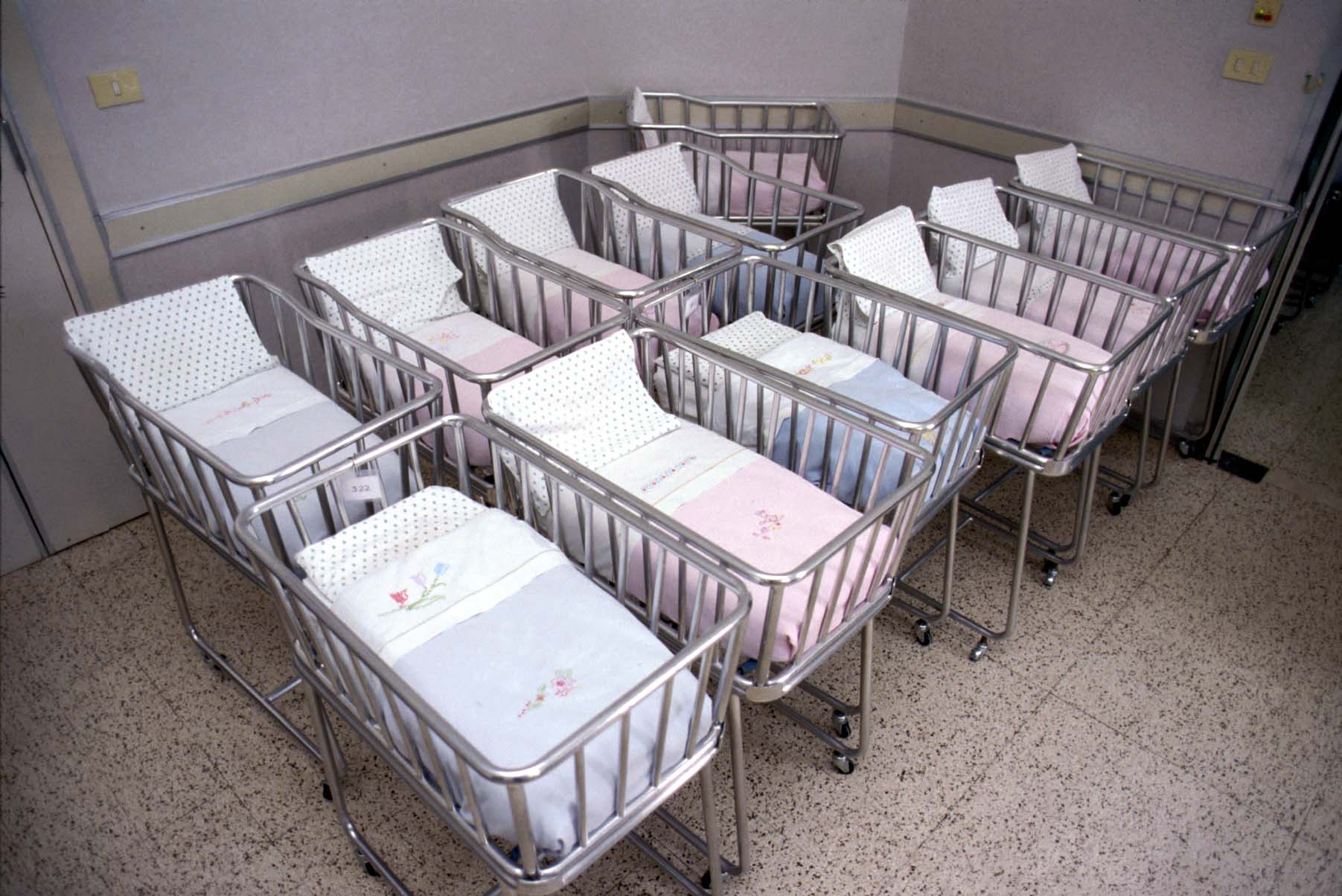
Portugal: 30 measures against declining birth rates The Independent Commission on Natality has highlighted the need for “a new public policy” and for “a long-lasting agreement for the promotion of investments in this sector”. The report presented by a group of experts coordinated by Joaquim Azevedo, Professor of the Catholic University of Oporto, shows that “an articulated, consistent set of measures aimed at the gradual recovery of confidence for the increase of birth rates in the Country is urgently needed”. Bearing in mind 2035 as ideal timeframe, the survey carried out by the Commission titled “For a Portugal friend of Natality and Children” proposes a set of 30 measures that are expected to increase Portugal’s birth-rate from 1.03 to 2.31%. In terms of contributions, measures envisage a gradual decrease of tax-burden for families based on the number of children per family, amendments on the Municipal Tax on property that takes into account the number of family members, a cut in road tax for vehicles, a system of subscription for public transport, along with family rates for water, collection and disposal of waste. The Report highlights a set of favourable strategies, such as maternal leave from work for a year, in addition to the current parental leave period, the opportunity to work part-time, support for employment of pregnant women and of mothers or fathers with children up to three years of age. In the area of education are listed a set of priorities such as increased flexibility and revision of costs of kindergartens. In the area of public health, the Commission proposes the mandatory assignment of a family doctor to pregnant women. In the field of new technologies and social awareness, the study supports the need to promote a “Family Portal” and a campaign on the causes of infertility. “If the Portuguese population feels the need to have twice as many children, why are we still awaiting the implementation of measures that envisage the removal of the causes which hinder growth, and which would thus favour higher birth rates?” Concludes Commissions’ Report. Slovakia: collection of school items for the needy Pens, pencils, schoolbags, rulers and other items for school education are the object of a special summer collection promoted by Caritas Slovakia that will be ongoing until the end of August. The purpose of the project is to support pupils in primary and secondary schools from socially disadvantaged families. “Thanks to a long-distance adoption project, we help children in world countries by financially supporting their studies so they may have a better future. However, there are many children in difficult situations also in Slovakia, and we should not overlook the problems of those living near us”, said Radovan Gumulák, Secretary General of Caritas Slovakia, who added that special attention will be devoted to the needs of pupils in Ukraine, mainly in the areas affected by the ongoing armed conflict and instability. As of June 1 a collection has been promoted in 35 Caritas centres across the country. The entire project has educational as well as charity purposes. “We appeal especially to those children with many school materials to show solidarity and share these items with their poorer schoolmates”, concluded Gumulák in an interview with SIR Europe. For further information: www.charita.sk. Czech Republic: TV series on religious behaviour “Body, mind, society” is the title of a documentary series currently in its production stage by the national CZECH TV in Brno. Its purpose is “to discover unknown features of religious practices at individual level” and to present “an original scientific approach to religion” in the Czech Republic, said Ales Chalupa, chairman of the Institute for Religious Sciences of the Masaryk University in Brno. For example, viewers will take part in an experiment aimed ad discovering why specific religious events generally trigger feelings of fear while others further sentiments of joy in people’s lives. “We want to show that religious behaviours are not isolated from the lives of each one of us, while it’s naturally present in our every day lives”, said film director, Director of Photography Jirí Strnad. There documentaries will marked by action while others will prompt reflection and meditation. The series is due to be presented to the public by 2015.
