TOWARDS PARIS
On foot from the Danish border to the French capital to bring an ecumenical message to the protagonists of the Cop21 Climate Conference

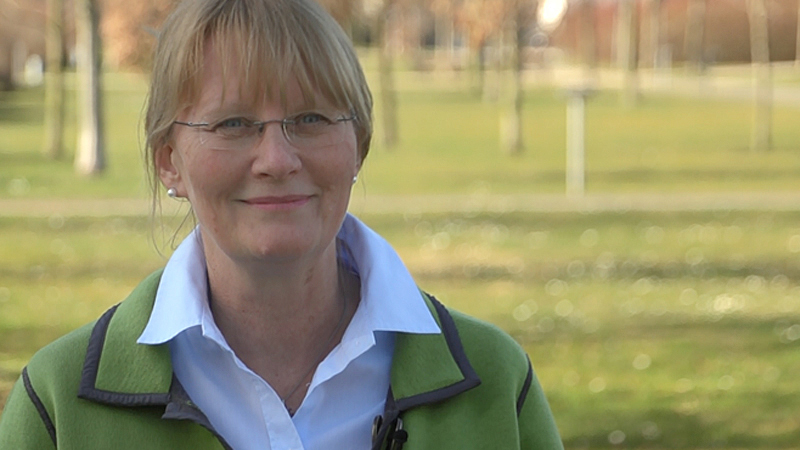
In a twelve-step journey from Flensburg – on the border between Germany and Denmark – to Paris, participants in the ecumenical pilgrimage for climate justice “Go!” will cover 1,470 km by foot. They will leave on September 13 and will be in the French capital on November 27. The initiative is promoted by a broad ecumenical network of associations. A real ad hoc breviary will accompany the steps of the pilgrims along the journey in stages where are being organized meetings and activities of various kinds, socio-political workshops, advocacy actions, proposals of concrete commitment. On 28 November there will be a closing interfaith celebration in Paris with a message to world leaders ahead of the discussions on the Cop21 of November 30. Sarah Numico interviewed for Sir Europe Karin Kortmann, vice-president of the Central Committee of German Catholics (ZdK), sponsor of the initiative along with Annette Kurschus, president of the Evangelical Church in Westphalia, Heinrich Bedford-Strohm, chairman of the EKD Council , Archbishop Ludwig Schick of Bamberg and head of the “Universal Church” Commission of the German Bishops’ Conference. The recent encyclical of Pope Francis on the environment provides Catholics in Europe with a further ecological thrust. What is the message the pilgrims bring to Cop21? “A joint international message is being drawn up. The underlying requests include binding commitments for all Countries, legislation providing for monitoring activity and that the objective of the two degrees is reached without an increase of emissions until the end of the 21st century. We address these requests also to the economic realm, to civil society and set is as a goal to ourselves”. Can this initiative of the German Churches be extended at European level? “The invitation of the World Council of Churches to a decade of pilgrimages for justice and peace has been welcomed in many parts of the world. Some examples: in the United Kingdom interfaith and non-denominational environmental groups work together. An international group of pilgrims is expected from the Philippines. They will walk from Rome to Paris; it is hoped that the initiative will involve many people from different countries. Through the European Forum of the laity we invited our brothers and sisters in Europe to walk with us or raise attention on Cop21 with initiatives in communities and dioceses. Various international proposals can be found on the website: http://peoplespilgrimage.org/“. What is the state of relations of the ecumenical pilgrimage and other initiatives of civil society and the laity with Paris? “I clearly remember the ‘Peoples Climate March’ at the climate summit last September in New York. It was the largest event on climate that ever took place in the US. Religiously motivated pilgrims along with many other organizations demanded more climate justice. The ‘council process for justice, peace and integrity of creation’ of the 80s established a close link between Christians and activists for climate and the environment and the ideological boundaries were crossed. I hope that many religious groups and parish communities will come to Paris together with world climate activists from around the world. Although perhaps the goals do not always correspond 100%, the basic target is the same: we need a comprehensive, binding, ambitious and fair agreement by the Heads of State and Government”. To what extent is there environmental awareness among German Christians? “Christians are not automatically the best environmentalists, although the protection of creation is part of our core mandate. Even for us environmental disasters in Southeast Asia, water pollution caused by the gold mines in Guatemala or coastal flooding in Bangladesh are still far away. As in many other areas, prevention is less spectacular and visible than aids in disaster relief operations. In all the German dioceses there are coordinators for environmental protection, Catholic and Protestant associations organize days of action … Drinking fair trade tea or coffee is no longer sufficient as a declaration of solidarity and many Christians have initiated debates on ‘sustainable economy, denouncing greedy sales strategies and they invest, as communities and associations, in renewable energy sources. Until the concept of growth is linked to sales profit and income increase, we will continue needing many examples of good practices that show that a better world is possible”.
