CHURCHES IN EUROPE
Touching testimony of the prelate, former archbishop of Prague, CCEE chairman in the 1990s. His words echo those of the Pope

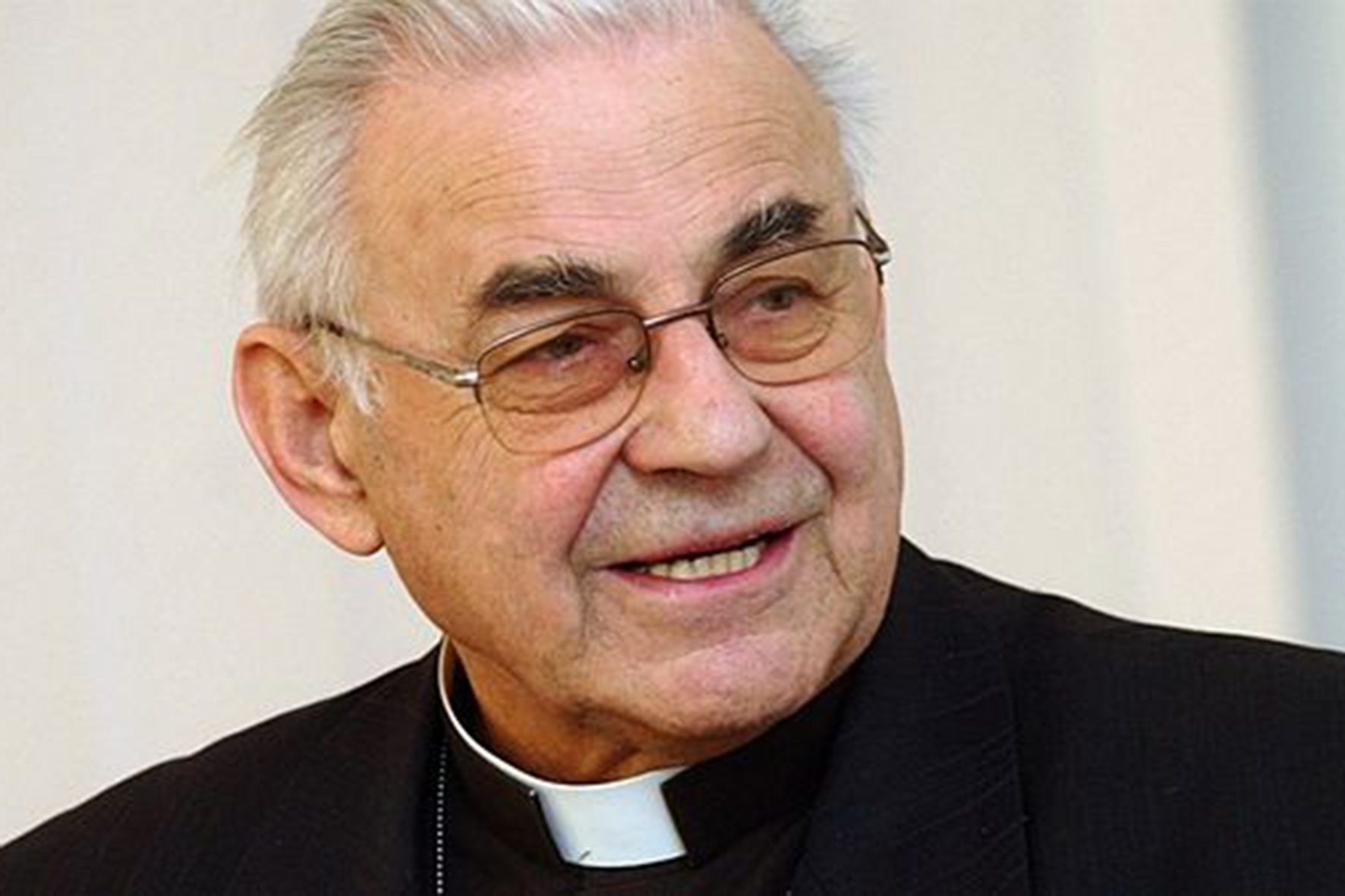
“In spite of everything I think that people are in search, in search of God. So God returns, He accompanies us in history and always gives us renewed hope”. The life of Cardinal Miloslav Vlk, 83, was not an easy life. Born in Czechoslovakia in the period between the two world wars, Cardinal Vlk lived his adult life and his priestly vocation under communist rule. He was ordained – after countless hardships – in 1968, he worked in a factory and for a long time also as window-cleaner, to make ends meet. After the fall of the Iron Curtain, in 1990 he was consecrated bishop, the following year he was appointed archbishop of Prague and was made a Cardinal in 1994. In the years 1993-2001, he served as chair at the Council of European Bishops’ Conferences. In CCEE he retraced his personal story and shared important insights on the presence of Christian faithful in the today’s Czech Republic (among the Countries believed to have a strong atheist connotation) and in contemporary Europe. The occasion was given with the meeting of the spokespersons of the bishops’ conferences of the continent (Prague, June 17-19) and of the general secretaries (June 18-21), centered on the new frontiers of ecclesial communication, on the Pope’s encyclical on the environment, on the Year of Mercy, on “transparency inside the church”. Fresh air, another step. “After 40 years of communism there came fresh air, a new step in our history”. Cardinal Vlk – among the most renowned ecclesial figures in Europe owing to his strong Christian witness – always adopts extremely measured language, and abounds with smiles. It could be said that he already incorporates mercy as such, so dear to Pope Francis. “However – he pointed out – after 1989 we failed to fully acknowledge our past”, consider its shadows, lights and legacies. “For example, we know that the past century experienced two world wars and two systems like Nazism and Communism that oppressed mankind and were grounded in hatred. History’s lesson, to this regard, is that these two regimes have collapsed because nothing solid can be built on hate”. The glance of the prelate reposes on current reality, characterised – as he points out – by egoism, racism, individualism, that “darken solidarity, which is always needed”. In the future of Europe. Sharing his story he faces the situation of the Catholic Church in the decades of the Warsaw Pact. “The governments imprisoned all the bishops, high numbers of priests were isolated and the faithful were forbidden to freely attend the parish. They understood that communion creates the Church and thus they deliverd hard blows against it”. He added: “We were oppressed in our faith. Those were hard years, but we felt God’s presence near us. This is the theme of my life. In every hardship, the Lord supports us, and never leaves us without His comfort. With Him near us we can face every ordeal”. The Cardinal returned to mention our present times, in which Europe appears to be going through “a sort of eclipse” of faith and growing secularization. The Gospel and Christian faith, he pointed out, are in Europe’s future. God is near us”. This message is in line with the words conveyed by Pope Francis during the journey to Strasbourg, in the heart of the EU, at the end of November. “God calls for our cooperation”. His Eminence shared a reflection on his home Country: “Is the Czech Republic and atheist Country?” is the question, according to several surveys, which show that believers are but a small minority. “It’s not true – Vlk replied – in fact, I perceive an awakening, the buds are starting to sprout”. “God is back”, he said, quoting a best-selling book. “I see people, among them many youths, who are in search. But it is necessary to bring limpid testimonies of Christian life”, he said, “just as the Pope does, with his evangelical witness, rich in gestures that everyone can understand”. A “communicative Pope”, the cardinal said before some forty press officers and spokespersons of the bishops’ conferences members of the CCEE. He underlined: “I am trustful. With my life behind me I see this future with the act of God, although it requires our full availability and collaboration”. No compromise. Before such an eminent witness questions abound. Your Eminence, what was the meaning of the sacrifice of Jan Palach, symbol of anti-Soviet resistance? “Jan Palach set himself to fire” on January 16 1969, in Saint Venceslao Square, not far from the seat of the CCEE meeting, “when he realised that the Spring of Prague was on the point of vanishing. With this gesture he called upon everyone to take on their responsibilities”. And what about today? “The message remains the same. As during communism, there is no room for compromise solutions. We must remain faithful to Christ and to the Gospel”.
