THE VISIT IN SARAJEVO/1
The Pope in Bosnia-Herzegovina underlines the Country’s place in Europe, An appeal to religions and youths to be committed in dialogue and reconciliation

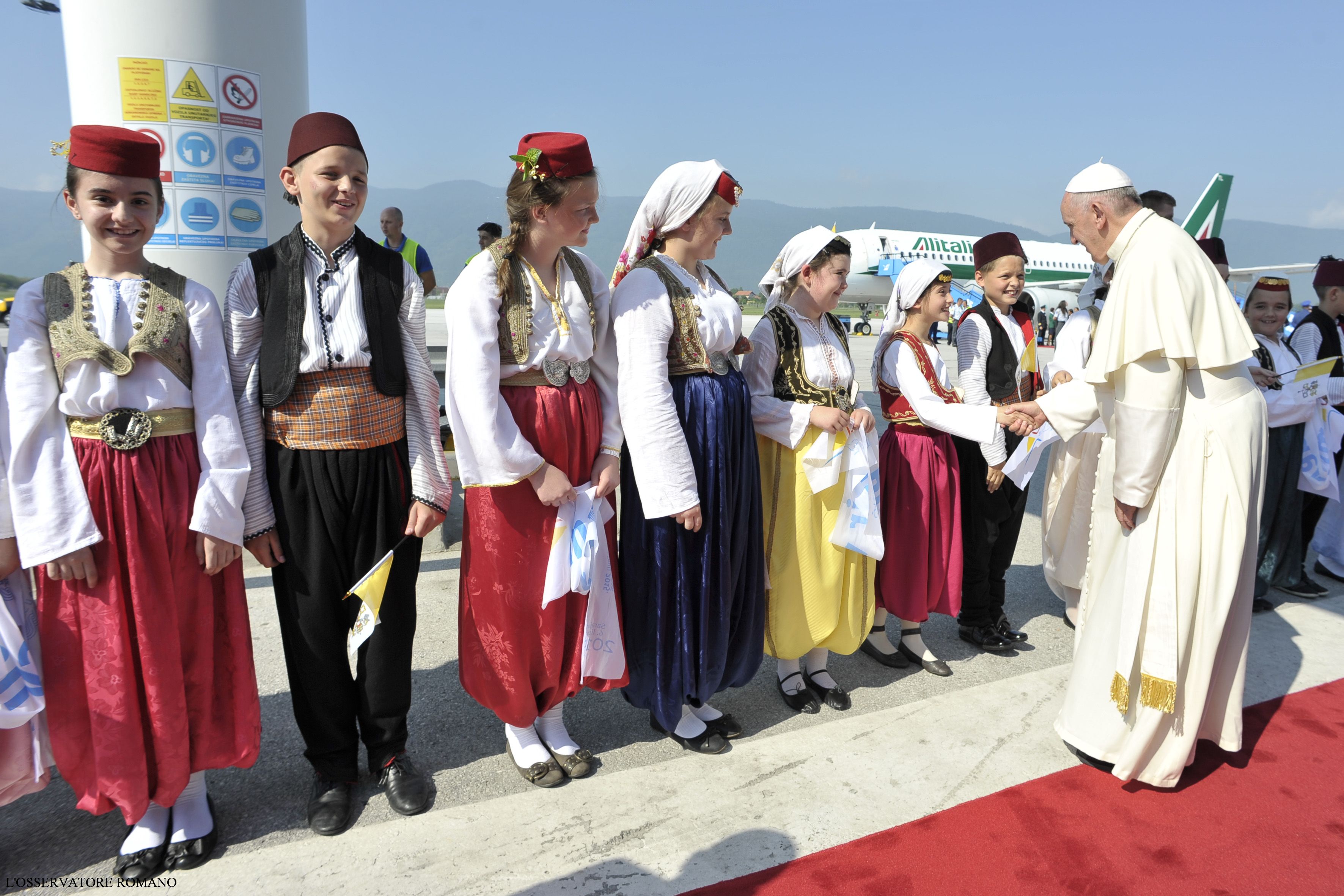
After the “A” of Albania the “B” of Bosnia: the alphabet of dialogue and peace of Pope Francis is enriched with the visit of Sarajevo. An eleven-hour visit in the Balkans and five speeches to encourage the local Catholic minority, to reiterate the importance of practicing justice and peace, and the urgent need to promote reconciliation and dialogue between religions. Open wounds. While in Albania Francis had addressed a more homogeneous reality (in fact, the various confessions share the same ethnic identity and jointly experienced Communist persecution), the situation in Bosnia is completely different. The 1992-1995 war was frozen by the 1995 Dayton agreements that marked the Country’s division on ethnic and religious grounds, slowing down its development, social and economic growth, and most of all, reconciliation. Many open wounds have transformed Sarajevo, a city that has lost its post-card image with its synagogue, mosque and cathedral at such as short distance from each other. On the banks of the river Miljacka are felt strong divisions and the Pope gave renewed impetus to his personal encouragement for the furthering of dialogue and reconciliation. Arrived as “pilgrim of peace and dialogue”, Francis said he is “happy to see the progress which has been made” after the war, “however, we should not become complacent with what has been achieved so far but rather seek to make further efforts towards reinforcing trust and creating opportunities for growth in mutual knowledge and respect”. This process must involve the international Community, the EU first of all. “Bosnia and Herzegovina – he told the three members (Croats, Serbs and Muslim-Bosniaks) of the three-party Presidency, the moloch resulting from the Dayton agreements – is in fact an integrating part of Europe. The successes and tragic experiences of the former are integrated fully into the latter’s history of successes and tragedies”. They are “a clear call to pursue every avenue of peace, in order that processes already underway can be yet more resilient and binding”. In the Balkans the Pope raised his voice against “the barbarity of those who would make of every difference the occasion and pretext for further unspeakable violence”, opposing “the fundamental values of human communities, values in the name of which we can and must cooperate, build and dialogue, pardon and grow; this will allow different voices to unite in creating a melody of sublime nobility and beauty, instead of the fanatical cries of hatred”. “No more war”. Beneath the huge wooden Christ, placed on the altar of Kosovo’s stadium, before 65 thousand people; Francis reiterated the words of Pope John Paul II during his visit to Bosnia in 1997; with their sad topical relevance. In the world “a kind of third world war is being fought piecemeal, and there are those who want to create and foment this climate deliberately, especially those who want clashes between different cultures and civilizations, and even those who speculate on wars for the sale of weapons”. His Holiness thus highlighted the mandate drawn from the Beatitudes: “Blessed are the peacemakers”, with a specification: do not limit yourselves to be “preachers of peace”, “all are capable of proclaiming peace, even in a hypocritical, or indeed duplicitous, manner”, but be “makers of peace. Crafting peace is a skilled work”; it requires passion, patience, experience and tenacity”, and most of all, it requires “justice”. And “true justice, then, is doing to others what I would want them to do to me, to my people”. The exact opposite of what happened in Bosnia, as testified by the three consecrated persons in the meeting with the clergy and the religious in the cathedral. Avoiding clashes with dialogue. In this path of reconciliation religions play a fundamental role underlined by Bergoglio, that involves religious leaders and all the faithful alike. “Interfaith dialogue is a school of humanity and a builder of unity, which helps to build a society founded on tolerance and mutual respect” but “it cannot be limited merely to the few, to leaders of religious communities, but must also extend as far as possible to all believers, engaging the different sectors of civil society. We are all aware that there is a long way yet to go. Let us not be discouraged, however, by the difficulties, but rather continue with perseverance along the way of forgiveness and reconciliation”. The Pope repeated this invitation in the last meeting with the youths, “the first generation of the post-war period, the flowers of a spring that wants to progress”. “Work for peace together – the Pope said. May this be a Country of peace. Peace is built together, Muslims, Jews, Orthodox and Catholics. We are all brothers and sisters, we all worship the same God”.
