EDITORIAL
The vote to say yes or no to Europe, promoted by the British premier for 2017 may lead EU 28 to undertake a joint reflection on the future of integration

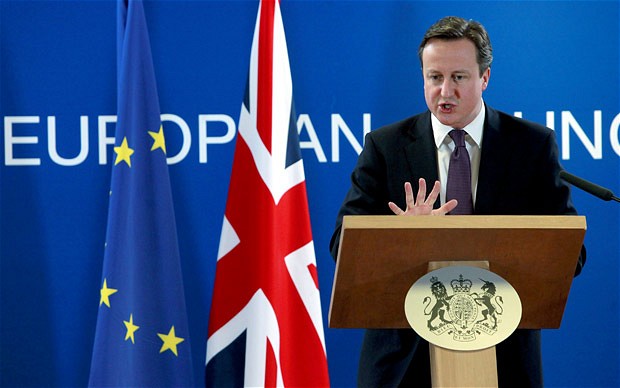
After the sharp victory of Cameron’s Conservatives in the recent British elections, the Queen’s speech – which traditionally announces the fundamental lines of action of the new government – confirmed the intention of the Prime Minister and that of his party to hold a referendum on the permanence of the European Union in the United Kingdom by the end of 2017. The referendum was one of the electoral promises that enabled Cameron to thwart the rise of UKIP to the right, and thus its adjournment is not possible. Along with the Greek crisis and the migration emergency, there’s a third front, critical to the EU’s future. The current institutional setting of the EU signalled an evident incapacity to respond in real time to European populations’ disaffection and delusion, not always based on the same motivations. There is large consensus on the request for relevant reforms of community policies. However, we’re still far from a common vision on which path needs to be followed. On his part, Cameron has launched a set of meetings with Brussels’ leadership and with several European heads of State to illustrate the English requests. In the two coming years the United Kingdom will fight with determination to loosen the bonds that tie it to other EU member Countries, using the spectre of London’s exit from the EU as a bogus that everyone would like to side step, but which will be hard to avoid if the requests of the English government should be dismissed. England can already count of various lightering clauses from EU commitments obtained across the decades, while British economy is not bound to the ECB’s monetary commitments. As a result, the problems linked to the euro currency and to economic problems as a whole don’t constitute the engine prompting England’s will to obtain greater autonomy. Unquestionably, Cameron’s government wants to avoid the that a set of financial regulations launched after the recent crisis be extended to London’s City. Indeed, the real knot behind the referendum is migration. Not only future migration, since Great Britain already enjoys a protection clause that exempts it, for example, from the redistribution of asylum-seekers arriving from Mediterranean Countries. There is also a migration already present on English lands, including intra-European migration. A large number of British voters, not only supporters of the Conservatives, are demanding cuts to migration quotas and restriction to access by migrants, also within the EU Community, to the English welfare system. Migration is a hot issue in many European countries, and it was a central theme in the recent electoral campaign in England. In fact, some experts believe that the referendum campaign could bear the same traits as the campaign for the Scottish referendum, whereby national identity was compared with the economic benefits of integration. Many English people aren’t happy about a total exit from the EU, just like a large number of Scots didn’t intend to detach themselves from the rest of the Kingdom, but everyone strongly supports greater autonomy. If Cameron manages to obtain reforms to present to his constituency, the referendum will remain in the hands of UKIP and it will be watered down. It would be wise for other European countries to seize the opportunity of the initiative of the UK to reconsider the EU at length. Someone suggested the launch of a two-speed Union, distinguishing “Eurozone countries” from the other member States. But at present also the opinions of other States adopting the euro currency are controversial. There is a want of far-sighted leaders, while the adoption of a single fiscal policy seems a mirage.
