EDITORIAL/2" "
What does the outcome of Ireland’s referendum tell us? At stake are the relations between “ethics and the market, human rights and financial values”

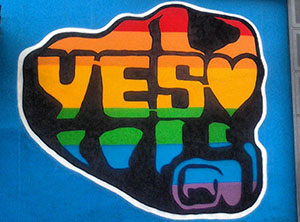
“Multinationals like Twitter and Google that sided with the ‘yes-vote’ have their head offices in Ireland and people fear that the victory of the no-vote would have isolated and damaged the Country also economically”, said Diarmuid Martin, archbishop of Dublin, the day after the opening of ballot boxes, in an interview released to an Italian national daily commenting on the massive yes-vote to same-gender unions in Ireland. It’s not the only reflection of the archbishop, in fact, in his replies to the journalist he also underlined the need for a conscious examination by the Irish Church on what has happened, a lack of attention by the same Church to the signs that for some time anticipated the outcomes, expressed perplexities on the lack of parliamentary debate, and announced the outbreak of new, serious problems ensuing the exultance of a large part of the population who proclaim themselves world pioneers in the area of human rights. On another page, the same newspaper features an interview with the British, world renowned political advisor, Simon Anholt, titled: “The world needs the party of humanity”. At a certain point Anholt claims that “according to the Good Country Index, Ireland ranks first at international level for its economic capacities. These figures date back to 2010”. Thus those who follow the news ask themselves if the reflection of the archbishop of Dublin highlights a problem that extends beyond Ireland, pertaining to the relationship between ethics and the market, between human rights and financial values. It’s a question, just a question for the time being. It was also spurred by Pope Francis when on May 23rd he reiterated his condemnation of a global economic system that puts at the centre “an idol, god-money. This is what rules! This god-money destroys, and causes a culture of waste”. There is no reference to the recent events in Ireland but it appears equally fitting to identify in the Pope’s words an alarm on the influence that money can exert also upon specific ethical issues. The “culture of waste” doesn’t only involve social and economic issues, that impact old people, the poor and unemployed youths, it also extends to questions regarding marriage between a man and a woman, the family, children and life itself. The disastrous drifts of corruption, illegality, exploitation, reported by the media over the past days, are coupled by others that are equally serious, as highlighted by the archbishop of Dublin who said that “a fundamentalist idea of the family prevailed”, while the “concept of marriage, as a fundamental aspect of social cohesion, has been lost”. In this situation, added Msgr. Martin, “any argument on social ethics is doomed to failure”. This is not a sign of resignation or surrender. Rather, it’s an appeal to the Christian sense of responsibility and of all those, who just like them, have the future of humanity at heart. In particular, Simon Anholt, in the above-mentioned interview said: “I have faith in human nature. I see the future as an exciting challenge. Humanity has a proud tradition in terms of challenges. And we are living in a period of major challenges. Thus I expect wonderful things and I already see them all over”. Also here we find no reference to the outcome of Ireland’s popular referendum, but in the statement we can perceive an appeal not to fear challenges, not to underestimate them nor keep them silent. Rather, there is a strong invitation to truth that knocks on the doors of human conscience, warning us that the future of humanity is not in Ireland’s yes-vote, and that it extends beyond Ireland’s skies.
