FINLAND" "
The elections voted down the government and promoted moderate parties. But the Country is divided, growing hostility towards foreigners and the EU. The floor to an expert

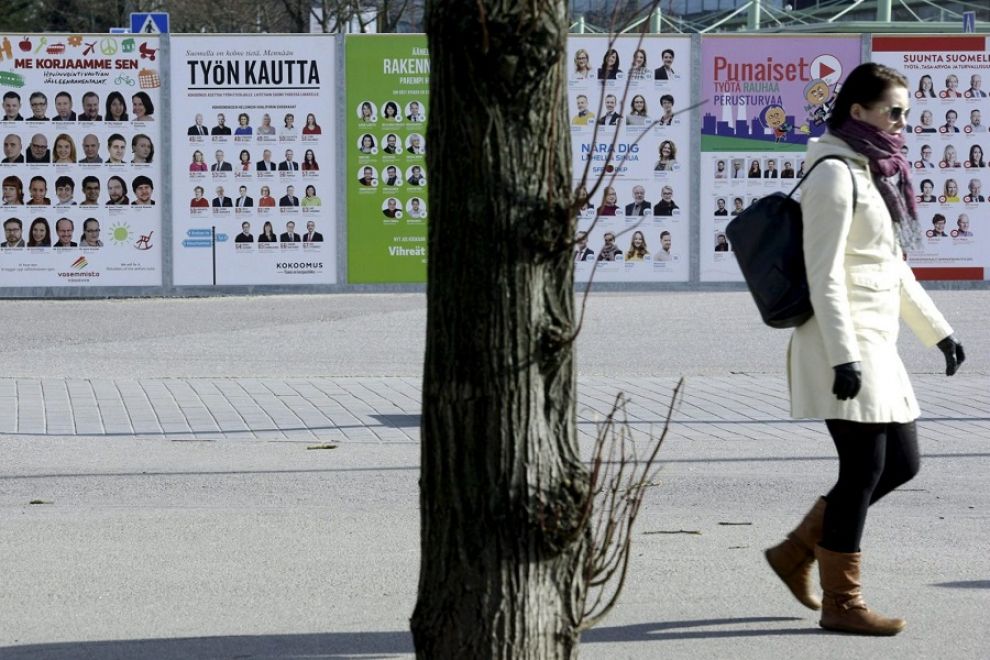
Future Finnish premier Juha Sipilä, leader of Keskusta, announced a month’s time to develop the new government’s working programme and its formation. The outcomes of the polls, past April 19, reversed the political landscape. Centre party (Keskusta) won the elections (with 21.2%, 5.3% more compared to 2011) gaining 49 seats in Parliament out of a total of 200. The national coalition Party of former premier Stubb has lost 2.2% of voters, gaining 18.2% of all votes. Divided between the more progressive and conservative wings, he passed to the opposition. The third party preferred by voters was the Party of Finland (Perussuomalaiset, 17.6%), led by Catholic Timo Soini. In order to sit in the government he will have to hold off the xenophobic and anti-European forces inside his party. The Social Democrats, who were in government, have lost 2.6%, but candidates for the ruling coalition could join in. Even the Christian Democrats have lost one seat. The Green Party (Vihreät) is celebrating the recovery of 5 seats and 1.3% of the vote. While waiting Finland’s developments, Sarah Numico Sir Europe asked Mikko Mattila, Professor of Political Science at the University of Helsinki, to provide an overview of the election results and possible prospects. Professor, what do the elections results say? “As it often happens, after a period of unsuccessful government, majority parties loose, at was the case for the national coalition party and the Social Democrats, while the major opposition party, holding centrist positions, won. It should be remembered that the Finnish Party lost 1.4% and a seat in parliament. But since many had predicted a even more serious loss for the Finnish Party, in a way they were among the ‘winners.'” What are the major political and social problems of Finland today? “During the election campaign the main problem was the economic situation. The public sector is going though a situation of structural deficit, and most political parties were confronted with a list of cuts. This situation stems from rapid population ageing and minor fiscal revenues. It’s the same problem of many European countries, with the difference that this kind of development in Finland takes place more rapidly. When this factor is added to the decline in industrial production, many observers picture a rather gloomy future”. What have been the failures of the previous government? “The greatest mistake was made by former premier Stubb, who was unable to keep together his government coalition that failed to reach an agreement on the major reforms they had previously promised, such as the reform of social and health systems. When signs of failure emerged in the surveys things started to get worse, to the point that government parties even voted against some of their own proposals”. Voters chose two party leaders, a Lutheran Juha Sipilä (Keskusta) and Catholic Timo Soini (Perussuomalaiset, Finnish Party). To what extent did their religious affiliation play a role in this decision? “Indeed, Juha Sipilä has a religious background, which emerged in the media during the campaign. However, Sipilä himself tried not to stress this aspect. But his religiosity probably attracted some of the voters. Timo Soini is a conservative on the social plane, and he’s been very explicit about it. Everyone knows he is Catholic, and that he’s very open to this regard. Since there are not many Catholics in Finland, it could be considered an obstacle, but this has not been the case. I think that many voters, albeit non-Catholic, have appreciated his honesty as regards religious affiliation, but in general I don’t think that the fact of being Catholic has been a determining factor for voters”. What consequences could the presence of the Finnish Party, of nationalist matrix, have on the policies such as migration or EU membership? “If the Finnish Party should sit in the government, as it would like to, it will ask the new government to step up restrictions on migrants, to be more critical of the EU and promote European integration. However, since the centre Party leads the coalition, Soini will have to accept a compromise on a set of issues, although we still ignore its terms”. Finland and Europe: which future prospects? “The EU was a theme addressed during the election campaign, but only in relation to Greece. The debate focused on the position Finland would take in case the need for a new bailout package arose. It was a delicate theme for all political leaders. They were unwilling to address the issue at length and nobody made a specific commitment prior to the vote”.
