EDITORIAL
Daily life is increasingly online, smartphones guide personal decisions. The EU Commission’s spotlight

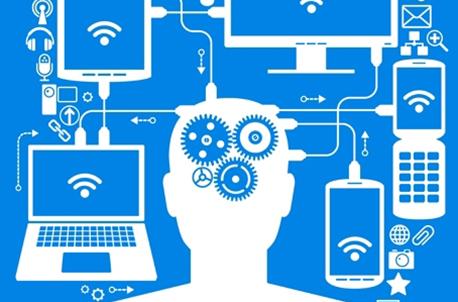
Digital technologies are increasingly shaping our daily lives. This fact raises a set of questions on the cultural, media, legal and educational planes. Often the answers must be sought at European level. From this perspective the European Commission has recently promoted a debate providing guidelines on the EU strategy for the single digital market, planned for adoption in May. The Commissioners understand its opportunities for the European economies and societies, but they also identify attacks on the dignity of the human person, risks for consumers or hanging issues in terms of competition policy. Notwithstanding the progress made in the field of new means of communication, modern technologies are integrated in what is described as the “Internet of things”, which is an countless mass of “probes”, in most cases microscopic, connected to any object, which forms a huge data collection system. These “probes” are connected to the Internet in wireless mode. The rapid development of the Internet of things is impressive. At the beginning of 2014 some 10 billion devices – computers, mobile phones, clothing, fridges, food, plants, airplanes, people – have been connected in wireless mode. It is estimated that they will be 30 billion in 2020. The amount of collected data is immense: 172 daily Visa transactions worldwide, 500 million messages on Twitter, just to give a few examples. This “big data” is memorized in the “cloud”, or, in simpler terms, in the huge ‘server farms’. In the future, smartphones are likely to become our most precious objects, if they aren’t already. Through smartphones we are connected and we define our personal approach with a combination of downloaded apps and integrated parameters. In fact, in all likelihood an avatar of ourselves will give us advice on our health, inform the members of our family, our physician, our insurance. We will use it if our body should send us irregular messages, to adapt our houses’ heating systems to our habits, to tell us which dinner options our home fridge provides us with also according to our weight, and to suggest us an array of supermarkets products on the basis of previous purchases. The new world established with the Internet of things will have undeniable advantages, for example in the economy of energy, because it will offer intelligent or “smart”, solutions. However, there are evident risks and disadvantages. The matter at stake is the respect of citizens’ privacy and consumers’ rights. It’s not the machine that will behave like a human being; it’s the human being that risks adapting to the needs of the enormous machine represented by the Internet of things. From this perspective the European Commission is planning three major pillars of intervention for its digital strategy. First of all, it intends to improve consumers’ and enterprises’ access to digital goods and services, notably by furthering access to cross-border e-commerce. The second target is the creation of a favourable environment for the development of networks and digital services. In this way, the adoption of the Regulation on the protection of personal data would increase users’ confidence in the safety of online platforms and search engines. Finally, third pillar, the Commissioners intend to give to the digital economy its potential for long-term growth. For this it is necessary to solve problems connected to ownership, data protection, and big data regulations. In the framework of its competition policy the European Commission also remains vigilant to large technology companies. Amazon, Apple, Facebook and Google are currently being investigated with respect to their tax practices, their data protection policy, the possibility of their illicit dominant market position. On April 15 the Commission spotlighted the Google-case, charged with abusing its dominant position on the European market, while the Android operating system for smartphones has also come under investigation. Margrethe Vestager, EU Commissioner for Competition, said: “Smartphones, tablets and similar devices play an increasingly important role in the daily lives of many people. We want to ensure that the markets in this sector can develop without anti-competitive restrictions imposed by some companies”. The social teaching of the Church prevents us from condemning technologies as such, but asks us to formulate demands on their methods of use. This is why it is imperative to closely follow the works of the Commission in this area.
