SLOVAKIA
Caritas’ concrete commitment in support of patients with incurable diseases. Hands extended to families. Public appeal and fund collection

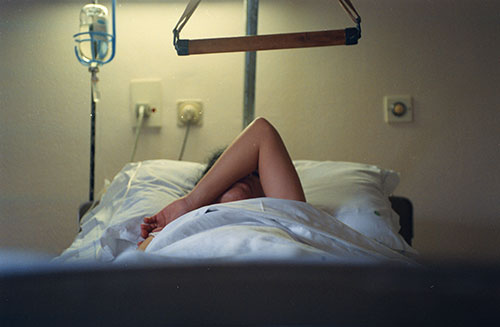
Caritas Slovakia has recently launched an appeal calling upon all segments of society to devote grater care to all those suffering from incurable diseases. According to the secretary general Radovan Gumulak, interviewed for Sir Europe by Danka Jaceckova, these people "are marginalized in various ways", and are facing serious problems in the final stage of their existence. When speaking of the problem of those suffering from incurable diseases in Slovakia, Caritas underlines the injustice in the funding of private clinics. What complicates their life in particular and what are your proposals to improve the situation? "Health insurance companies refund only 60% of subsistence costs in private healthcare centres, the rest must be paid by the patients and their families. In order to be capable to cover the costs for those who cannot afford a private healthcare centre, every year a public collection is organized for the needy. We consider the current system unfair, as it places private healthcare centres among the "luxury" category that many people cannot afford, although for them private hospitals are often the only solution. These nurseries are the only such centres that ensure that patients do not suffer unbearable pain and that their human dignity is respected in spite of their incurable disease. It would be a good thing if health insurance companies began reimbursing real costs invested in nurseries in Slovakia. This is what we’re trying to explain to authorities in charge." Caritas Slovakia is the larges supplier of healthcare services to sick people in the country. How do you handle such large numbers? "We help incurable patients in our three in-patient care homes and other 12 mobile clinics. In this way we were able to provide our services to over 450 patients. Unfortunately many of them have passed away. We also assist incurable patients in their homes through 22 home nursing assistance agencies." What have been the results of the recent collection for care homes of Caritas Slovakia that ended at the end of January? During those three months, people have generously contributed more than 13,500 euro. We will distribute this money between our care homes and centers for nursing home care. Detailed information will be available on our website: www.charita.sk". Caritas is an institution founded and run by the Catholic Church. Pope Francis, the attention and care that he tirelessly devotes to people in need, must represent a great comfort to overcome the obstacles in your service, and a source of spiritual strength … "The Holy Father is an immense source of inspiration for us. He constantly emphasizes that we must not forget those who are suffering, the sick, and the victims of human trafficking. We work in a long-term perspective with all these groups and it is natural that we seek encouragement and inspiration in his words. He reminds us that we all have a vocation to devote ourselves to the poverty of our brothers and sisters, to get in touch with it and take concrete steps to alleviate it. It is an invitation to spread the message of love of our merciful God, our Father, who is always ready to embrace everyone in Jesus Christ, especially all those who are going though a situation of material, moral and spiritual deprivation. His words that charity is a caress offered by the Church to people in need are beautiful." When referring to patients who have no chance of physically healing we cannot omit the question of euthanasia, which is legal in certain countries and is the object of constant demands to making it legal also in other Countries, on the widely believed assumption that euthanasia "would enable people to put an end to their life with dignity." Is also Slovakia under this threat? "First of all, the dignity and value of an individual don’t depend on the quality of life. I perfectly agree with the Holy Father who says that euthanasia is a sin against God and a false form of compassion. There have been attempts to bring the debate on this issue also in Slovakia on the part of some Liberal political parties. The truth is that an action of this kind can’t be justified on ethical grounds. In the present circumstances I don’t think that euthanasia could be explicitly legalized in our Country, at least not for the next ten years. However, today we are facing a so-called ‘indirect’ euthanasia, implemented by neglecting and marginalising old people in many areas of life thus transforming them in a socially marginalized bracket, threatened by poverty and not considered necessary by others. In practical terms this is reflected in the lack of home nursing assistance, social and medical-healthcare services. Healthcare workers, especially those who declare themselves Christians, have the responsibility to contribute to improving this situation with their skills, their involvement, and a deeply human approach that draws inspiration from solidarity."
