UNITED KINGDOM
Regional movements make a breakthrough. Yorkshire, Cornwall, North East want autonomy, like Scotland and Wales. The floor to protagonists and political analysts

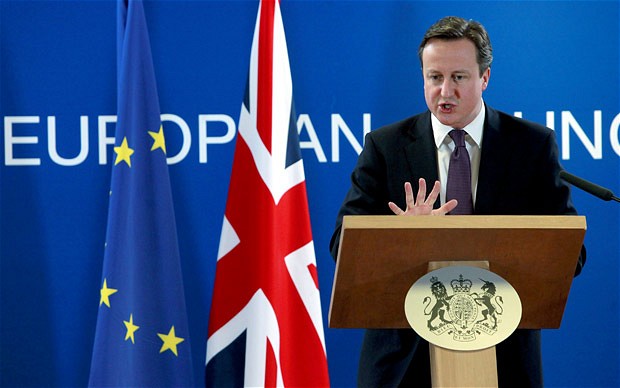
Just over two months away from the national elections of Thursday, May 7, Westminster is fragmented. Envious of the powers obtained by Scotland, the other English regions, starting with Yorkshire and Cornwall, are asking for more autonomy. The alternation of the two major parties, Conservatives and Labour, uninterrupted since the Post-war period, belongs to the past. At the polls Scottish the Labour Party is likely to be swept away by the nationalists, while Cameron wants to give more power to the English regions to protect his own votes. Tories and Labour are, for now, close in the polls, but they will need a minority party to ally with – whether the Liberal Democrats, anti-European UKIP or Scottish nationalists – in order to govern. The risk is a weak government and the need for new elections. The fact remains that the already complex picture is starting to resemble a puzzle. “Yorkshire first”, away from London. They will wave their flag with the white rose in Parliament Street, in the center of York, which they hope will become the headquarters of another British parliament after those in Westminster, Edinburgh and Cardiff. Richard Carter, founder of the party “Yorkshire first,” proudly said that his city is the old capital of the Roman Empire, where two Emperors died. Its formation, created last April, with only 600 pounds collected on social networks, gained 19 thousand votes in the last European elections in this corner of the country, mostly from Scottish Nationalists, the anti-Europeans and Ukip. For the May election there are 5 candidates but they could rise to 27 if the party managed to get funding. “Yorkshire”, Carter told Sir Europe, “has the same population as Scotland and twice the economy of Wales. Yet the government invests in London ten times more, although the capital is the richest area of Europe, and we have the poorer areas. London smothers other English regions.” According to the founder of the “Yorkshire first”, “the parties that have always ruled Britain, Labour and Conservative, are losing votes because they are headed by elites that are distant from ordinary people.” “Instead, we are earning support also among younger people who usually are not interested in politics. We demand that the British state, the most centralized in Europe, is transformed into a federation.”Independent Cornwall? Yorkshire is not the only region of the Kingdom that wants to break ties with the city of the Big Ben. In addition to Wales and Scotland, which continue gaining autonomy from Westminster, there are also “Mebyon Kernow”, the party for an independent Cornwall, and the “North East Party”, which will present 12 candidates in the next election. Not to mention the “Yorkshire Independence Party”, more extreme than “Yorkshire first”, which demands complete independence from London. Should any of these parties succeed to enter Westminster the consequences on the British political system could be seismic, just like it happened in the seventies, when the Scottish National Party won its first seat. According to John C. Hulsman, president of the “John C. Hulsman Enterprises” (www.johnhulsman.com), permanent member of the “Council on Foreign Relations”, “the basic problem in the UK, but also in the rest of Europe, is that none of the largest parties has an answer to the problem of globalization.””Tories and Labour are liars”. “Neither conservatives nor Labour have the courage to tell people that a safe, lifelong job no longer exists, that it’s no longer possible to retire at 55 with a pension that corresponds to their salary and that 6 weeks-holidays are a memory of the past”, Hulsman told SIR Europe. “But we can still live well if we leave behind the past and manage the future.” At the next election, according to Hulsman, Labour risk disappearing in Scotland while SNP, the nationalists’ party, could win with flying colors, thereby becoming an indispensable ally for Miliband if the latter fails to defeat Cameron.No to fragmentation. For Ivor Roberts, of Trinity College, Oxford, these are the most uncertain elections in the history of Great Britain. However, the former diplomate doesn’t belive in regionalism. “We already tried to have regional parliaments ten years ago, but people rejected this possibility in a referendum”, Roberts pointed out. “Certainly, the new autonomy obtained by Scotland gave birth to these local parties, but I don’t see them as significant in the landscape of British politics. After all Yorkshire First got only 1% in the recent European elections. The old Anglo-Saxon model, which saw England divided into seven parts, has no regional support.”
