EU Council
The summit of June 22-23 saw old and new protagonists in the limelight. Among them, Tusk, Juncker, the Macron-Merkel tandem. Full agreement on defence, security and fight on terrorism, while migration registers disunited positions. Brexit: May “softened” by electoral failure

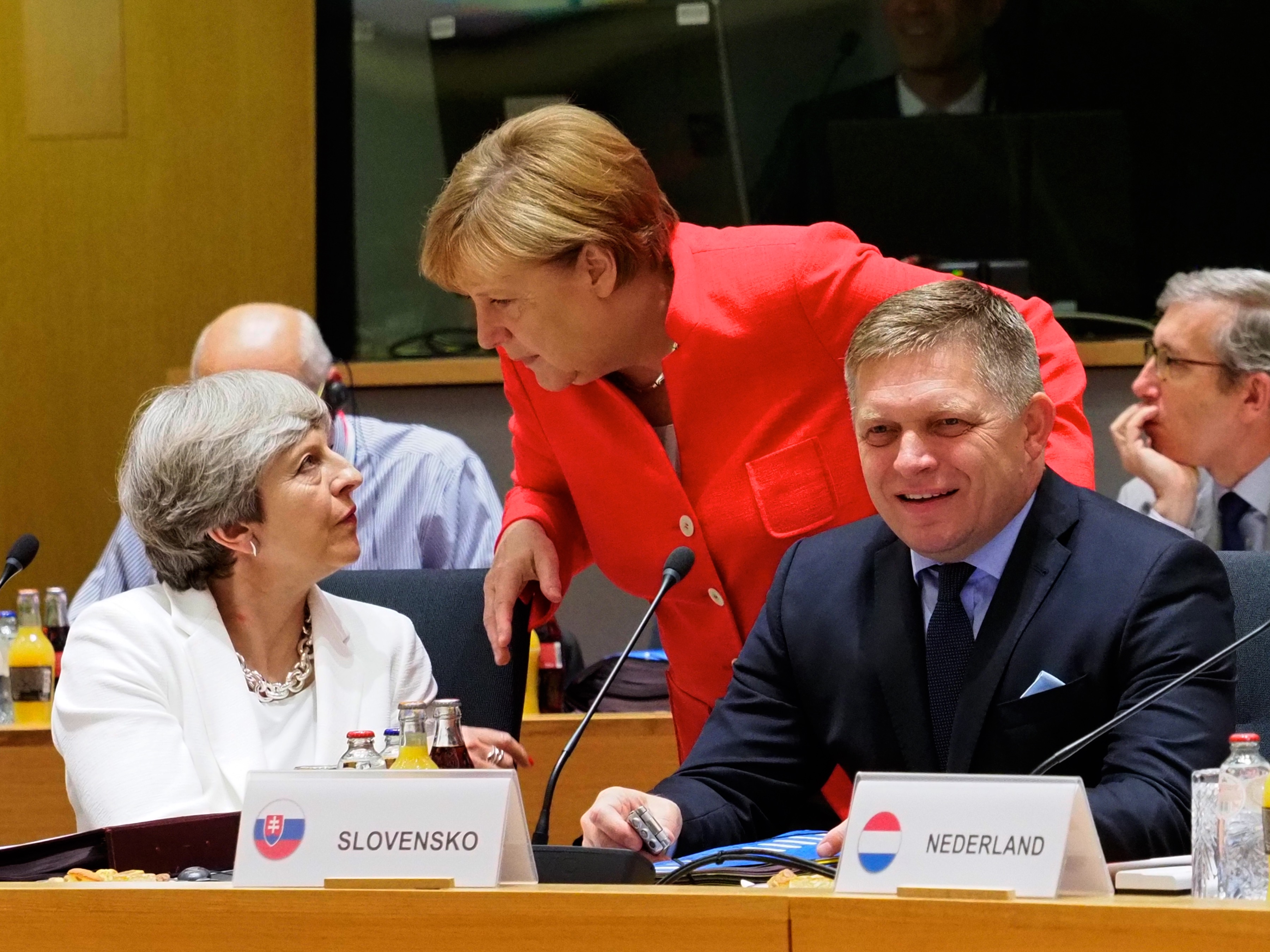
The summit of reunited Europe, the European Council of old and new protagonists finally transmits the image of a EU committed to jointly respond to the many challenges it is being confronted with, without giving in to internal discouragement nor to external pressure. Precisely one year after the British referendum that established the Brexit (June 23 2016), the meeting of the heads of Government and State closed after two days of back-to-back debates, concrete results, and some minor diplomatic skirmishes; while on the migration front, the most thorny issue on the agenda, progress is yet to be made.
The protagonists. On the agenda of the meeting, held in Brussels on June 22-23, figured security and the fight on terrorism, defence policy (with a gaze extended to the international scenario), Brexit, the Paris Agreements and climate change, the Ukraine-Russia conflict, industry and trade policies, digital Europe.
In the new Europe building – the venue of the summit along with the Justus Lipsius building – the leading players were immediately noticeable.
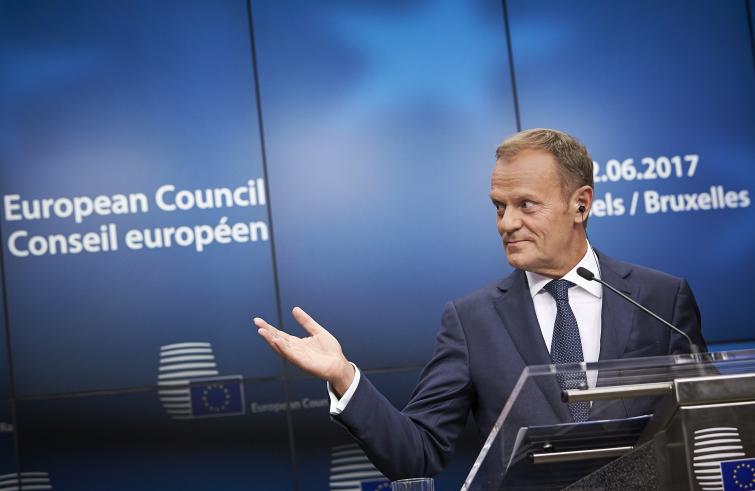
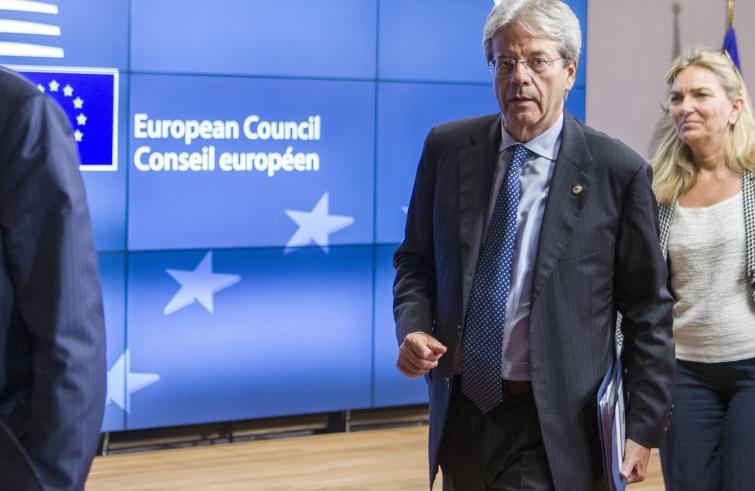
The confident Donald Tusk (President of the European Council) and Antonio Tajani (European Parliament); the quick-witted and always polemic Europeanist Jean-Claude Juncker; French President Emmanuel Macron, “new champion” of Community integration; German chancellor Angela Merkel, experienced participant in European Summits, who renewed, with Macron, the German-French axis, a historic engine of Europe. The meeting was also attended by British Premier Theresa May, who arrived in Brussels weakened by recent national political and electoral events; Italian PM Paolo Gentiloni, who, once again, called upon his partners who extend a helping hand to Italy and Greece, two Countries under pressure owing to the constant arrival of refugees from Africa and the Middle East.

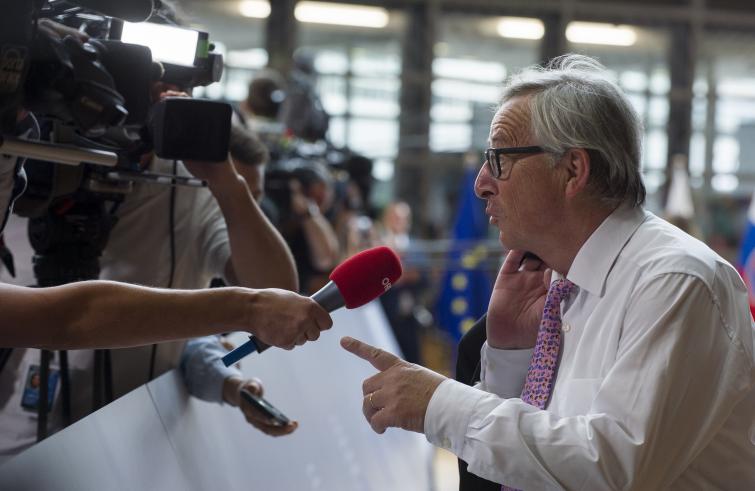
Brexit’s wake-up call. Thus the atmosphere was more serene compared to the dozens of summits that in the past ten years addressed the economic and financial crisis, the surging wave of nationalisms, the growing migration phenomenon, political instability at the borders (Russia, Ukraine, Syria, North Africa…) and the repeated terror attacks.
There is no shortage of problems on the leaders’ table, but probably the need for joint action is widely acknowledged.
It was reiterated several times by Donald Tusk: “We are witnessing the return of the EU rather as a solution, not a problem.” “Paradoxically, the tough challenges of the recent months have made us more united than before.” However, “we cannot be complacent or naïve. We have to prove to the people that we are capable of restoring control over events” and over the future of EU Countries and of the EU as a whole. His words were echoed by Italian Premier Paolo Gentiloni: “It seemed that Brexit had sounded the death knell for the EU, but it was a wake up call.” Drawing the conclusions of the summit, Tusk affirmed: “We have obtained good results. On migration we have reiterated our agreement to support Italy.”
Economic recovery under way. Also EU Parliament President Antonio Tajani, a guest at the summit, outlined positive prospects, albeit marked by unpredictable factors: “Recent election results and many opinion polls are pointing to a clear shift in public opinion on the European Union. One reason for this can certainly be found in the economic recovery Europe is experiencing, but it is not the only reason. Brexit, , the crises inside and outside our borders and the fears engendered by globalisation are prompting more and more people to seek protection in a united Europe. We cannot ignore this yearning for protection.”
Mario Draghi, President of the European Central Bank, in a speech delivered Friday morning underlined that “recovery is under way”, coupled by an increase in “investments and employment.” 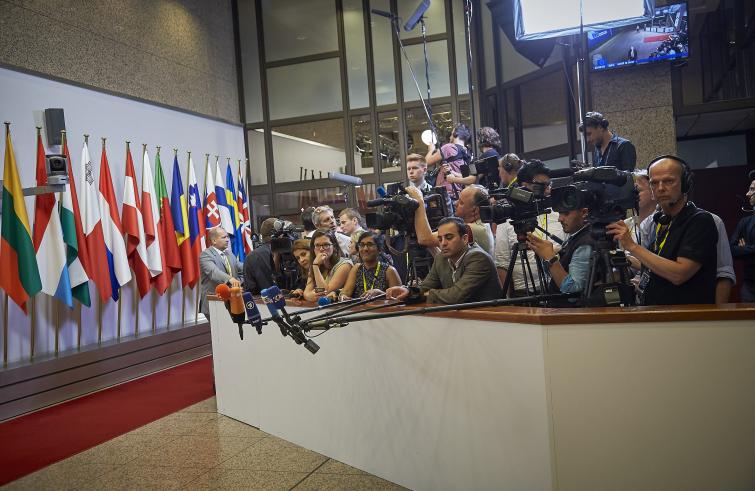 OK to defence, while on migrations… EU Countries share the same views on security and defence: green light to stronger cooperation in the area of defence, with the launch of a dedicated 5 bln fund. Furthermore, they agreed on the joint fight against terrorism, online radicalization, foreign fighters. On the Brexit Theresa May affirmed that the United Kingdom “will ensure the rights of EU citizens.” Those who have been living in the U.K. for five years “will be granted U.K. settled status” with all the ensuing rights. A document with the details of the line of action defined in London will be presented on June 26. “Too little” for Juncker, while Maltese premier Joseph Muscat, who currently holds the rotating presidency of the Council, cautioned: “We must ensure that there are no traps. For example, how will EU citizens residing in the UK for less than five years be treated?”. It’s a relevant question. Also related to Brexit are the criteria for the new banking and drug agencies seats that were located in the UK: applications from cities wishing to host the agencies can submit proposals until 31 July, the decision will be taken in November. Unity of intentions was registered on digital Europe, foreign trade, and the implementation of the Paris Climate Agreements.
Finally, Muscat and Juncker reiterated that more needs to be done to address the migration phenomenon,
by supporting Italy, accepting readmission and feeding the Trust Fund for Africa, that strives to take off. At that point, some Premiers from Centre-Western Europe turned their backs.
