EDITORIAL/2
The 2017 referendum on permanence in the European Union will define the second mandate of the British premier and his political heritage

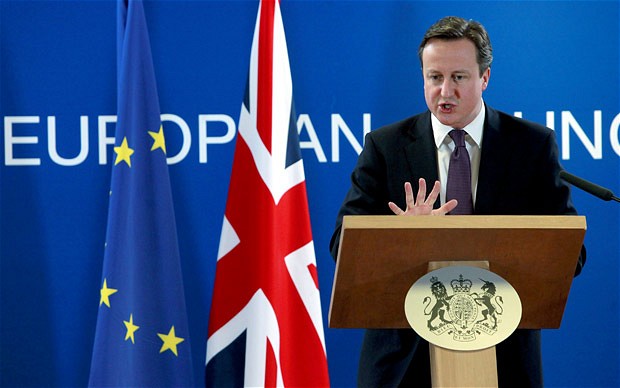
There were many in Brussels who enjoyed a sleepless night on Thursday 7 May, the day of Britain’s general election. The UK election night broadcast on BBC is always high entertainment, but that is not why the 2015 edition and the election outcome it reported kept so many in Brussels watching their televisions until the grey light of dawn appeared in the eastern sky. Most knew that the fate of Europe was at stake in the General Election and that the future profile of the EU depends on the man who inhabits 10 Downing Street.David Cameron commands an absolute majority in the new House of Commons. The Tories are governing alone. Thirteen restless backbenchers can theoretically bring down his government, but Mr Cameron now governs in the security that he does not have to negotiate Faustian pacts with the Liberal Democrats and has the authority to deliver, undiluted by the constraints of coalition, on the promises made to the Tory electorate. Top of the list of these promises is a referendum on continued UK membership of the EU by the end of 2017.The Queen’s Speech, delivered in the monarch’s usual downbeat tone, promises to put the country under starting orders for a public debate about Europe. The National Health, academy schools, and the high-speed train from London to Leeds will all take a back seat to the great question of Europe. Do we stay in or do we strike out and paddle our own canoe?The prospect of an in/out referendum in the UK provokes two reflections, very much in the spirit of COMECE, which espouses the long view of European affairs.Firstly, the UK is offered a unique opportunity to debate the question of Europe in an open, transparent and fair-minded way. This will involve assessing the historic role the UK has played in shaping Europe’s political tradition and administrative architecture. It will involve a fresh and honest look at the UK’s changed role in the world. And it will involve sober analysis of how British industry, the financial activities of the City and the education business (Britain’s largest, and not just limited to Oxbridge), would suffer were the UK and the EU to part company.The second reflection is more personal. It concerns David Cameron. Winston Churchill, speaking in Zurich on 19 September 1946 advocated “a sovereign remedy… to re-create the European family … and provide it with a structure under which it can dwell in peace, in safety, and in freedom. We must build a kind of United States of Europe.” Sir Winston kicked for touch when it came to the question of whether or not the UK should be one of those states. David Cameron was still in short pants, Eton was still some years into the future, when the UK joined the then EEC (1 January 1973). Unlike Sir Winston, he was born and bred in a UK that was firmly within the new and expanding European family that Churchill had done so much to create.The recent election campaign displayed a Tory Party not above playing the Little Britain card. Cameron played it shamelessly. Secure in No. 10 and with a majority government behind him, the EU referendum offers Cameron the politician, delivering on his promise to consult his people, a unique opportunity to rise above populist politics, embrace the European project and establish himself as a statesman. We can only hope he takes it.
