REFUGEES/3
Germany and Austria opened their borders to migrants. Not all problems have been solved, but the prospect of reception has changed. The role of the Church

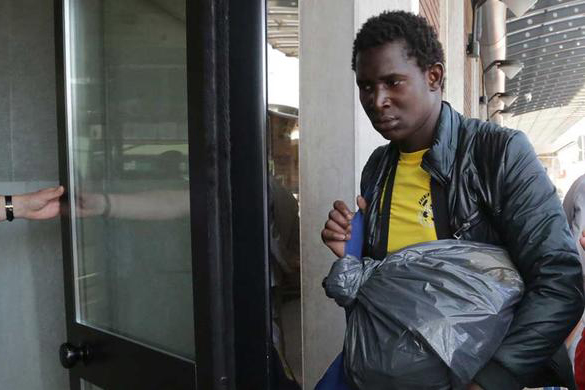
The decision of the Federal governments of Germany of Austria to open their borders to the inflow of refugees, involving various levels of civil society and volunteering in assistance procedures, is a turning point ushering in a new approach in terms of the rules and procedures adopted at EU level. The two Countries are now at the centre of admiration by a large part of Europe. And the Catholic Church is in the front line of reception to migrants. Cooperation at all levels. Germany’s suspension of regulations enshrined in the Treaty of Dublin, envisaging the confirmation of the refugee status and the acceptance of asylum requests in the first Country that receives them, with the simultaneous confirmation of an estimated 800-thousand requests in Germany for the year 2015, questions the dogmatic policy followed throughout Europe to date. The same could be said of concerted action involving governments and Churches, which in Germany is delivering unexpected results. Indeed, the decisions taken by the two Countries will need to be monitored in the medium term. However, the fact remains that two Countries have shown that efficient organization and intervention capacities that bring together public action, combined with the support of confessional bodies, can lead to choices as the ones we have witnessed over the past days, with the images of the border between Austria and Hungary or the train station of Munich. Faith and reception. “Being hostile to refugees and being Catholic are two conflicting concepts”, said cardinal Reinhard Marx, archbishop of Munich-Freising, President of the German Bishops’ Conference. Among the over one thousand volunteers, taking shifts at the station of Munich to host the refugees packed on the trains from Hungary, there also was the Cardinal and Protestant bishop Heinrich Bedford-Strohm, president of the Council of Evangelical Churches in Germany. It is not a mere gesture of goodwill. It is authentic participation. Their commitment has involved talking with the police, paramedics, railway officials and other helpers: Cardinal Marx has praised the dedication of the many volunteers, as well the work of authorities at all levels: a clear response to the xenophobic demonstrations of the past weeks against Syrian and Eritrean refugees. Border police and teddy bears. A fundamental role in the management of the flow of refugees in the south of Germany is played by the border Police that in several strategic areas, such as the village of Piding, on the Austrian-German border, has set up dedicated sites for assistance to people traumatized by the war. Monsignor Andreas Simbeck, chaplain of the Bavarian State Police, reiterated that “it’s an obligation to be present, and that the police doesn’t react to the insults of those vilifying the refugees, as its officials are trained to the particular emotional charge caused by the daily experience of suffering.” Inspector Johannes Reiter, in Piding, revealed to the Münchner Kirchennachrichten, an online daily of the archdiocese of Munich, that “when refugees cross the Austrian-German border, in window-less trucks, they are crammed and crushed to the ground, and become unconscious…” Shock is overwhelming when we look into children’s eyes. For this reason the border police division in Piding was sent a large number of teddy bears in the attempt to restore a smile on their faces. A warm meal. Caritas Munich transformed its Pater Rupert Mayer Centre, near the Central Station, in a large soup-kitchen with the constant delivery of warm meals, sandwiches, running the storage of primary needs goods to be distributed to incoming refugees. Not an improvised action but a specific organisational decision, 24-hour running, especially thanks to constant shifts of young students and families who made themselves fully available: “The Pater Rupert Mayer Haus said the director of the local Caritas, Msgr. Hans Lindenberger is at the disposal of all volunteers who have started cooking to supply meals to the refugees.” For Mons. Lindemberger, “citizens’ interventions in welcoming refugees near the central train station is impressive. Since the refugees’ assault is unlikely to decline, the firm commitment of the population is almost indispensable.” Yvonne Möller, director of the volunteering Centre of Caritas München Ost, underlined the opening of a service for “cultural adoption”, providing the “teaching of the German language and tutoring for administrative questions and social guidance”, that goes hand in hand with the collection of clothing and essential goods: “I find it wonderful that people bring beautiful and new things, but the nicest aspect is what is obtained in return by the refugees, namely, their motivation and gratefulness for everything they receive.”
