MIGRATIONS-HUNGARY
Increasing numbers of refugees hope to cross Austria or Germany. The efforts of the police. Orban in Brussels. The action of Caritas

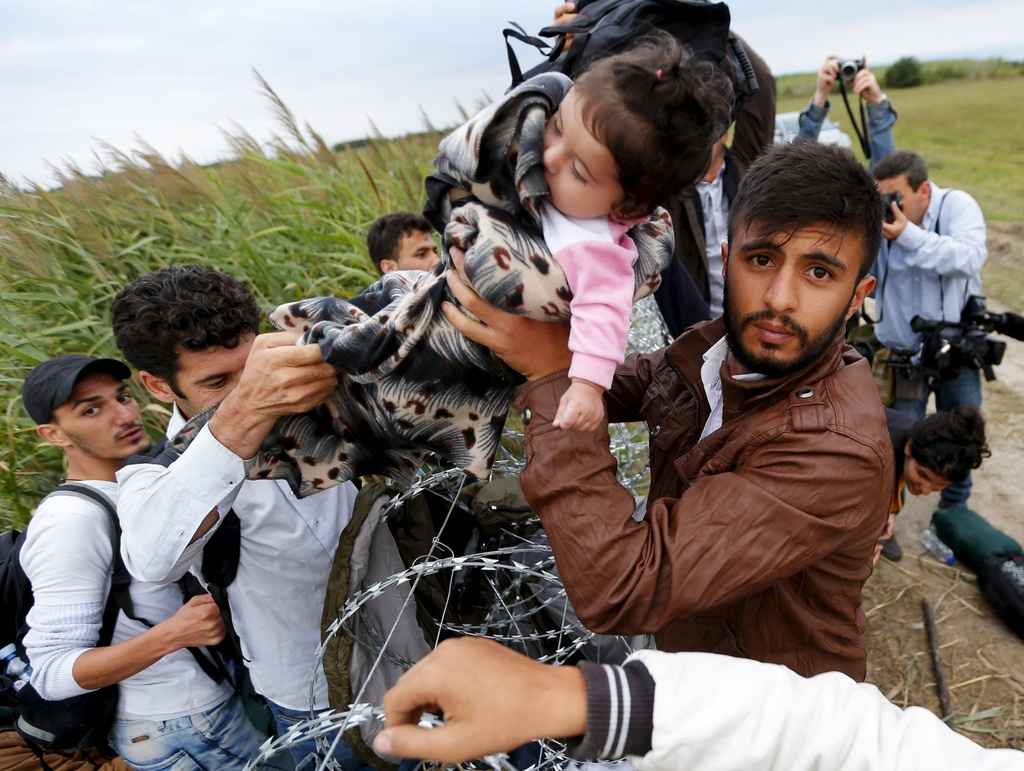
On the first days of September Hungary was put to dire test. And Budapest plunged into chaos. On the first day of the month, for three hours, the train station of Keletti stopped. No passenger could get on or off of the train and nationwide transportation was halted. The situation was the same in the following days. An estimate of the hundreds of migrants who from the southern borders of the country managed to reach the capital is impossibile. They preferred to illegally leave the refugee camps set up in the south, owing to their determination to reach at all costs Austria and Germany, the true destinations of their journey. Bálint Vadász from Caritas Hungary, who returned from a visit to verify the condition of two migrant camps in Nagylak and Kiskunhalas, provided an account of the frantic situation in Budapest and throughout Hungary as a whole. Escalating tension. Budapest was faced with the task of handling hundreds of refugees who arrived in the Balkans following the Balkan routes to north-western Countries. They display their previously purchased tickets and hold their children in their arms to show them to the authorities hoping in their indulgence. But for refugees stranded in Budapest there is no chance to get on the trains and leave without prior registration by the authorities. Thus, said Bálint Vadász, refugees are camped all around the train station, causing major disruption to traffic in the city. “What we see right now is unrest and garbage. It is not easy to manage such a high number of people, but the greatest difficulty for the police and law enforcement agencies is to identify the migrants according to European legislation”. In fact, Germany and Austria declared that they can receive only Syrian refugees, who are the only ones authorized to arrive and depart by Hungarian trains. Identifying them is practically impossible, because, the Caritas worker said, “migrants refuse to give their give their generalities and fingerprints. In fact, their goal is not to remain in Hungary but to leave the country as soon as possible. “In these conditions, it is normal that the tension escalates. And unfortunately this happens “because of small groups that react aggressively” to the requirements of the police. Human trafficking. According to figures released by the local media, as many as 2284 migrants entered Hungary, including 353 minors, 500 more compared to two days earlier. Most of them come from Syria, Afghanistan and Pakistan. Chaos fuels illegality and in the past 24 hours six human traffickers were arrested in Hungary. The government of Viktor Orban (who on September 3 met EU authorities in Brussels) is planning to adopt measures to stiffen penalties against migrants crossing the border illegally. In addition, the government intends to mobilize the army to strengthen defence on the border, as the barbed wire fence has not served to stem the flow of migrants. “It’s a complex situation – said Bálint Vadász – and it’s extremely difficult to indicate concrete ways leading to a solution. It is precisely because of the complexity of the emergency that we ask the media to do their job effectively, giving truthful accounts of what is happening and not interpreting reality, according to the channel to which one belongs”. Caritas deems it important “to provide direct information to migrants in the countries of departure, so as to inform them about what they must expect should they decide to undertake a journey with – sadly – no guarantees of success”. The Church sends aids. In the meantime the commitment of Caritas Hungary for the migrants continues without rest. In fact, scheduling a phone appointment with operators is not easy. Bálint Vadász and Caritas director Richard Zagyva just returned from a visit to the refugee camps in Nagylak and Kiskunhalas, in the framework of a project implemented in agreement with the government to verify the situation of the camps and the related needs. “We receive requests of water bottles, clothing, shoes and personal hygiene products primarily”, Bálint said. As many as 4 thousand kilos of humanitarian aids and 10 bottles of mineral water were distributed, all signs of a difficult and complex situation that the Hungarian Church is following attentively with concern and with concrete solidarity.
